Hardenbergia comptoniana
Hardenbergia comptoniana (Andrews) Benth.
Description
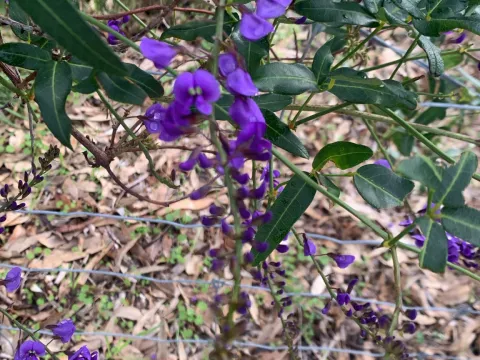
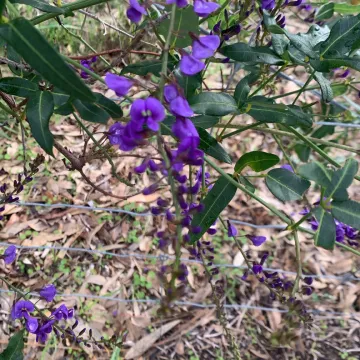
Hardenbergia comptoniana, commonly known as the Western Australian coral pea, is a perennial evergreen climber belonging to the Fabaceae family. This vigorous vine is highly regarded for its aesthetic appeal, particularly when its long, pendant racemes of pea-like flowers bloom in abundance. It is a staple plant in landscapes featuring Australian native flora.
Native to Western Australia, this species thrives in Mediterranean-type climates. While it is hardy in frost-free regions, it requires protection in cooler climates, making it suitable for conservatory or greenhouse cultivation in northern latitudes. Its natural habitat includes scrublands and woodlands, which dictates its preference for well-drained soil types.
Botanically, the plant is characterized by its trifoliate leaves and distinctive deep violet or blue flowers, though white variants exist. It is a woody climber that uses its stems to entwine around supports. Its root system is relatively robust, requiring a deep planting medium to maintain stability as the plant matures and expands its foliage.
The agricultural and horticultural requirements involve a sunny or semi-shaded position with soil that does not retain excessive moisture. Overwatering, especially during the dormant season, is a primary cause of plant failure. Regular pruning is essential to manage its vigorous growth and to encourage denser flowering in the following season.
Hardenbergia comptoniana is primarily used as an ornamental climber for fences, trellises, and pergolas. It serves as an excellent privacy screen when trained on wire supports and can also be used as a groundcover in large, open spaces. Its ability to provide quick coverage makes it a valuable asset for rapid landscape development.
- Prune back stems post-flowering to promote a bushier growth habit.
- Apply slow-release fertilizers during the onset of the spring growth cycle.
- Monitor for common pests like spider mites and aphids.
- Ensure excellent drainage to prevent crown and root rot.
Photo gallery