
Description
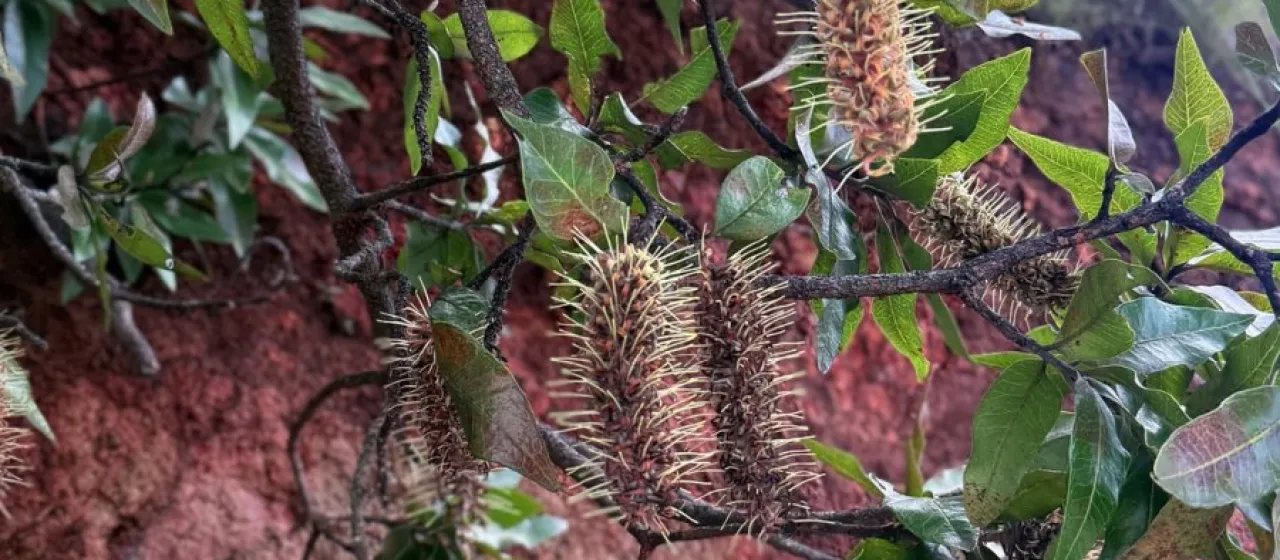
Faurea rochetiana is an evergreen tree or large shrub belonging to the Proteaceae family. Known for its distinct appearance and resilience, it often serves as a focal point in landscapes within its native range. The plant produces elongated, spike-like inflorescences that are highly valued for their ornamental appeal and their role in supporting local pollinator populations.
The species originates from the mountainous regions and savannahs of Tropical and Eastern Africa, including countries such as Ethiopia, Kenya, and Tanzania. It typically occupies altitudes ranging from 1,000 to 2,500 meters, thriving in environments that experience distinct seasonal cycles. Its natural habitat is often found along forest margins, where it benefits from moderate humidity and well-lit conditions.
Botanically, it is characterized by its tough, leathery leaves and unique floral structure. The flowers, ranging from creamy-white to pink, are densely packed on spikes that develop at the ends of branches. The fruit is a small, hairy nutlet, which is adapted for wind-assisted dispersal, allowing the species to spread efficiently across suitable terrains.
Cultivation requires strict attention to soil composition, as Proteaceae species generally prefer acidic, well-draining soils with very low phosphorus content. Over-fertilization, especially with phosphate-rich products, can cause significant root damage. The plant requires a sunny position and good air circulation to thrive, making it an excellent candidate for Mediterranean-like climates where frost is minimal.
Host-plant utility includes reforestation projects, erosion control, and high-quality timber production for local crafts. The wood is dense, durable, and highly appreciated for its unique grain pattern. While the species is hardy, it is susceptible to Phytophthora root rot in waterlogged soils and can be affected by scale insects if maintained in improper conditions.