
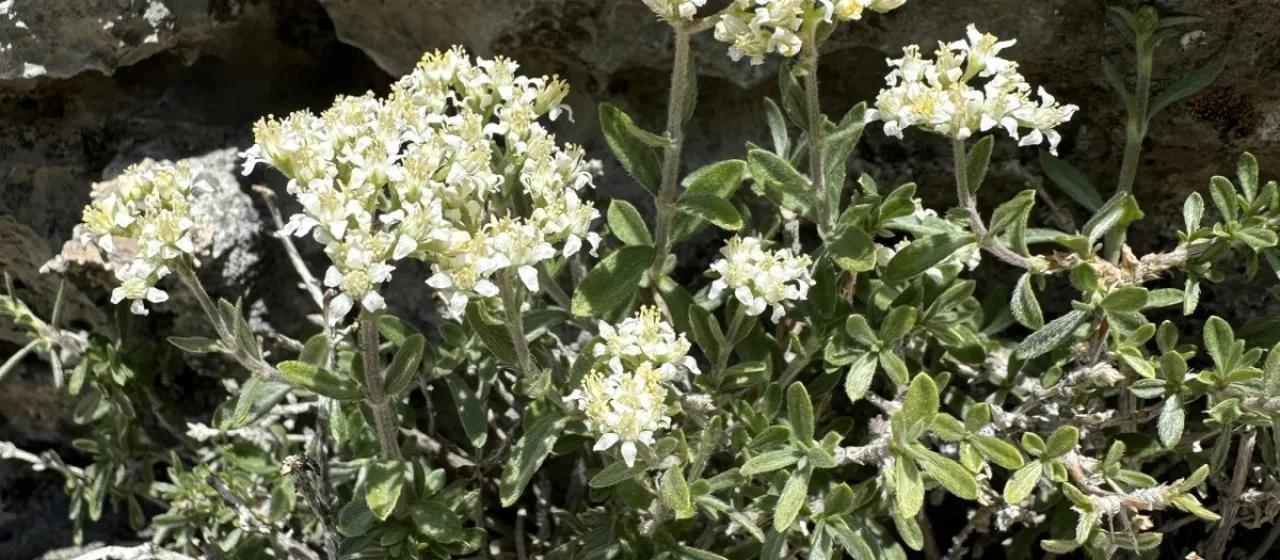
Description
Fendlerella utahensis is a distinct deciduous shrub belonging to the Hydrangeaceae family. While not a conventional agricultural crop for food production, it is highly regarded in horticultural circles for its ornamental value and its exceptional ability to thrive in arid, challenging environments, making it a staple for xeriscaping.
The plant is native to the southwestern United States, primarily inhabiting rocky slopes and canyons in states like Utah, Arizona, and Nevada. Its natural habitat is characterized by intense sunlight, high drainage requirements, and significant thermal fluctuations, which have shaped the plant's robust and drought-tolerant biological profile.
Botanically, Fendlerella utahensis is known for its compact, bushy habit and fine-textured foliage. The leaves are small, narrow, and arranged in an opposite pattern along the stems. During the spring and early summer, the shrub produces clusters of delicate, star-shaped white flowers, which provide a significant aesthetic appeal to rock gardens and dry landscapes.
The cultivation requirements for this species are specific and non-negotiable for long-term survival. It thrives in well-draining, rocky, or sandy substrates and requires full sun exposure to maintain its compact shape and flowering intensity. Over-watering and heavy, clay-rich soils are the primary obstacles to successful cultivation, as they often lead to root rot and other physiological stressors.
In terms of usage, the shrub is primarily utilized in sustainable landscaping and ecological restoration projects in arid climates. Like many mountain shrubs, it can be susceptible to powdery mildew if placed in high-humidity areas with poor air circulation. Common pests include occasional infestations of aphids or spider mites, which can be managed through integrated pest management strategies if caught early.