Description
Fennel (Foeniculum vulgare Mill.) is a herbaceous perennial plant belonging to the Apiaceae family. Characterized by its feathery, deep green or bronze leaves and bright yellow flowers, it grows as a hardy biennial or perennial depending on the climatic zone. The plant is widely recognized for its intense aromatic profile and distinct anise-like flavor.
Originating from the Mediterranean basin, fennel has spread as a crop across temperate and subtropical regions globally. It thrives in well-exposed sunny locations and requires a relatively long growing season to reach maturity. While highly adaptable, it shows a clear preference for regions with consistent warmth and moderate moisture availability during the vegetative stage.
Agronomically, the crop requires deep, fertile, and well-drained soils with a pH ranging between 6.0 and 7.5. Proper soil preparation involves incorporating organic matter before planting to ensure nutrient availability. Sowing is typically performed in rows, with precise spacing to encourage airflow, which is critical for reducing humidity-related diseases within the plant canopy.
The economic utility of fennel is diverse. The seeds are harvested for their essential oil (anethole), extensively used in food flavoring and medicine for digestive health. Vegetable fennel types, known as Florence fennel, produce an edible, bulbous stem base that is treated as a high-value culinary vegetable. Additionally, it serves as a nectar source for bees and various beneficial insects.
Pest and disease management is essential for maintaining crop quality. Common threats include powdery mildew, which can be mitigated by ensuring proper plant spacing, and aphids, which may require targeted biological or chemical control if thresholds are exceeded. Root rot can occur in poorly drained soils, making site selection and soil structure management the primary defense against yield loss.
Контент-граф
Connections · Fennel
Most often together:
Marketplace
Products · 18


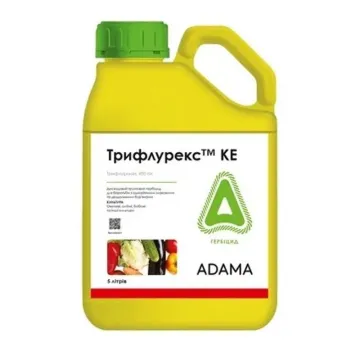
Triflurex 240 g.e., (Trifluralin, 240 g/l)
F.A.GAN Chemical Manufacturers Ltd. Israel, member
Herbicides, Desiccants
0
0
·
53
1 offer
12.89 €
Купить

Legat
«SHENYANG RESEARSH INSTITUTE OF CHEMICAL INDUSTRY (NANTONG) CHEMICAL TECHNOLOGY DEVELOPMENT CO., LTD», Nantong, Jiangsu, Китай
Herbicides, Desiccants
0
0
·
50
6 offers
12.9 €за 1 л
Купить

Treflan
Govan Commercial International & Service
Herbicides, Desiccants
0
0
·
47
8 offers
6 €за 1 л
Купить


Patrick C.E.
F.A.GAN Chemical Manufacturers Ltd. Israel, member
Herbicides, Desiccants
0
0
·
30
1 offer
0.83 €
Купить

Director, w.p.
Іпрохем Компані, Лтд., Шенжен, Китай
Herbicides, Desiccants
0
0
·
28
1 offer
55.42 €
Купить

Director, RK
Іпрохем Компані, Лтд., Шенжен, Китай
Herbicides, Desiccants
0
0
·
24
3 offers
2.8 €за 1 л
Купить

Glyphosatyn, v.r.
Jiang'an Agrin Company Ltd.
Herbicides, Desiccants
0
0
·
22
5 offers
0.3 €за 1 л
Купить

Trifluralin 480 g/L, herbicide
F.A.GAN Chemical Manufacturers Ltd. Israel, member
Herbicides, Desiccants
0
0
·
20
7 offers
6.1 €за 1 л
Купить