
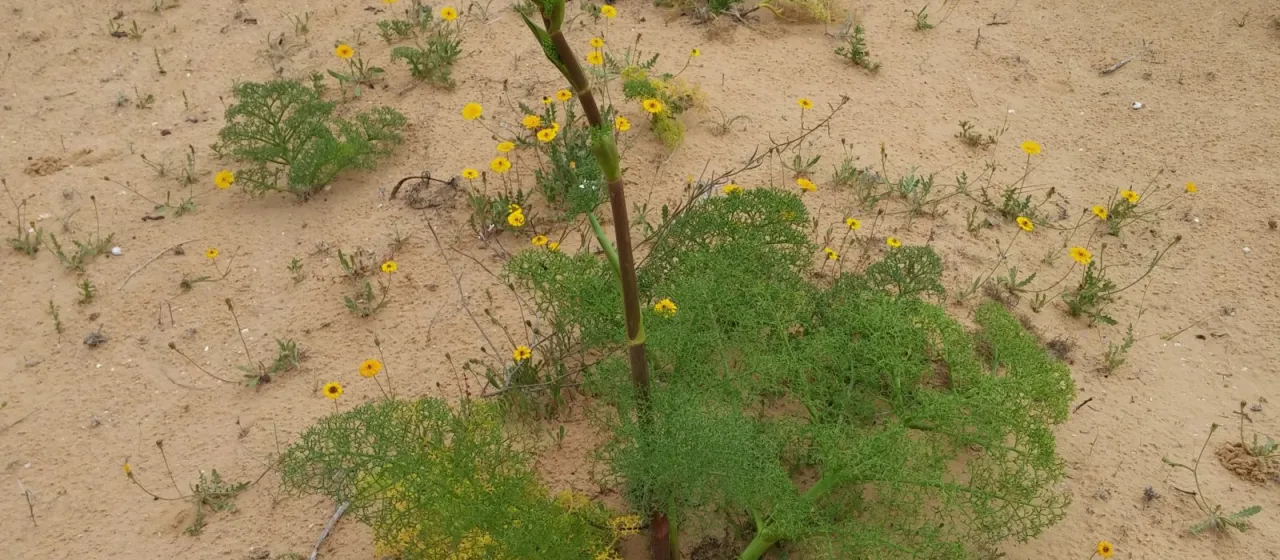
Description
Ferula sinaica is a perennial herbaceous plant belonging to the Apiaceae (Umbelliferae) family. This species is native to arid environments and serves as a vital subject for studying adaptation to water-stressed ecosystems. It represents a specialized group of plants that have developed unique physiological mechanisms to thrive in desert climates.
The origin and natural distribution of Ferula sinaica are centered around the Middle East, particularly the Sinai Peninsula and surrounding arid regions. The plant is well-adapted to high temperatures and alkaline soils, which are typical of its native range. Understanding its native ecology is crucial for any attempts at controlled cultivation or sustainable harvesting in commercial settings.
Botanically, the plant is characterized by a sturdy root system designed to store nutrients and water during dormant periods. The leaves are typically compound and deeply lobed, creating a rosette-like structure at the base. Its reproductive phase involves the development of a tall, erect flowering stalk topped with complex umbels, which is a signature trait of the family.
Agricultural requirements for Ferula sinaica focus on soil structure and irrigation management. The species demands extremely well-draining, sandy or gravelly soil; heavy clays or waterlogged ground are detrimental to its health. In an agricultural context, irrigation must be minimal, providing only enough to support emergence, as the plant is highly susceptible to root decay if the substrate remains saturated.
The industrial and economic potential of this species lies in its secondary metabolites. Various parts of the plant are investigated for their essential oils and oleoresins:
- Extraction of bioactive compounds for pharmacological research.
- Potential inclusion in specialized herbal cosmetic formulations.
- Use in desert land restoration as a hardy, native vegetation cover.
When cultivated, the crop faces several phytosanitary challenges, primarily involving fungal pathogens that attack the root crown under humid conditions. Pests such as aphids and specific larvae that target members of the Apiaceae family can also impact yields. A successful management strategy relies on strict environmental control and the prevention of over-irrigation rather than the intensive use of synthetic chemical pesticides.