
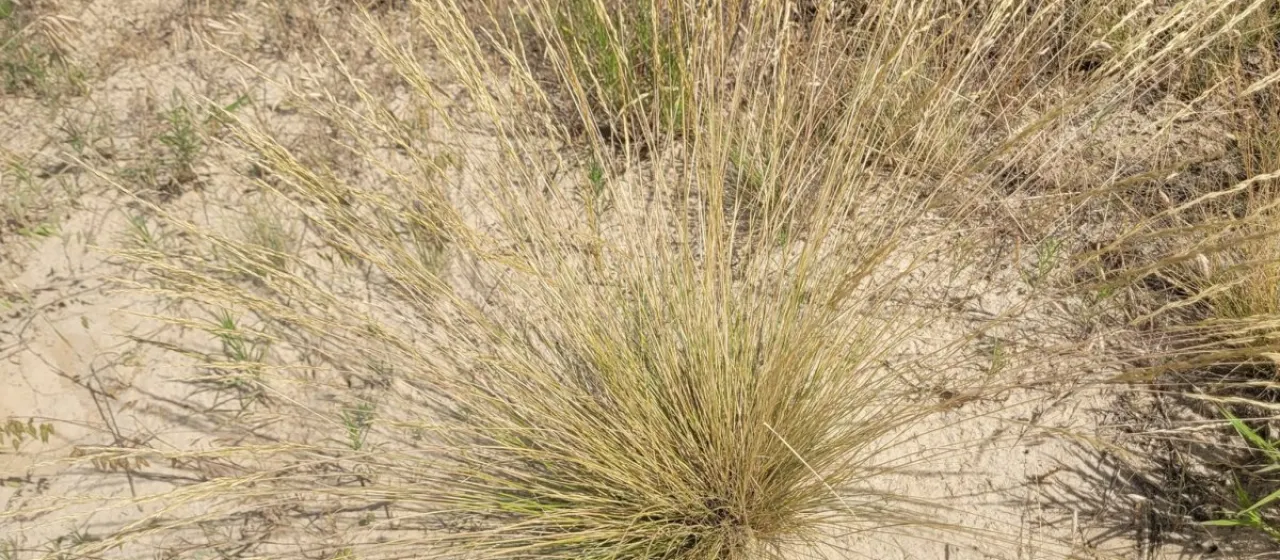
Description
Beckers fescue (Festuca beckeri) is a perennial grass belonging to the Poaceae family. This species is recognized for its dense tufted growth habit and its ability to thrive in challenging environments where other forage grasses often fail to establish or maintain productivity.
The plant is native to the steppe regions of Eurasia, where it is primarily found in arid grasslands, sandy soils, and exposed rocky slopes. Its distribution indicates a strong adaptation to continental climates characterized by hot, dry summers and significant temperature fluctuations throughout the seasons.
Botanically, this species is characterized by narrow, often glaucous leaves and deep-reaching root systems. These traits allow the plant to minimize water loss and access moisture reserves in deeper soil layers, which is a critical evolutionary advantage in its natural habitat.
Agronomic requirements for Beckers fescue are relatively modest. It prefers well-drained, sandy, or light loam soils and is highly valued for its tolerance to nutrient-poor substrates. Cultural management typically involves minimal intervention, though rotational grazing is recommended to maintain the vigor and density of the sward.
In agricultural practice, Beckers fescue is utilized mainly as a component of pasture forage and for land reclamation projects, particularly in sandy areas susceptible to wind erosion. It is relatively resistant to pests and diseases, provided that the sward is not overly stressed by excessive grazing intensity or waterlogging.
- Exceptional drought resistance.
- Tolerance to nutrient-poor soils.
- Effective for erosion control.
- High nutritional value in early stages.