
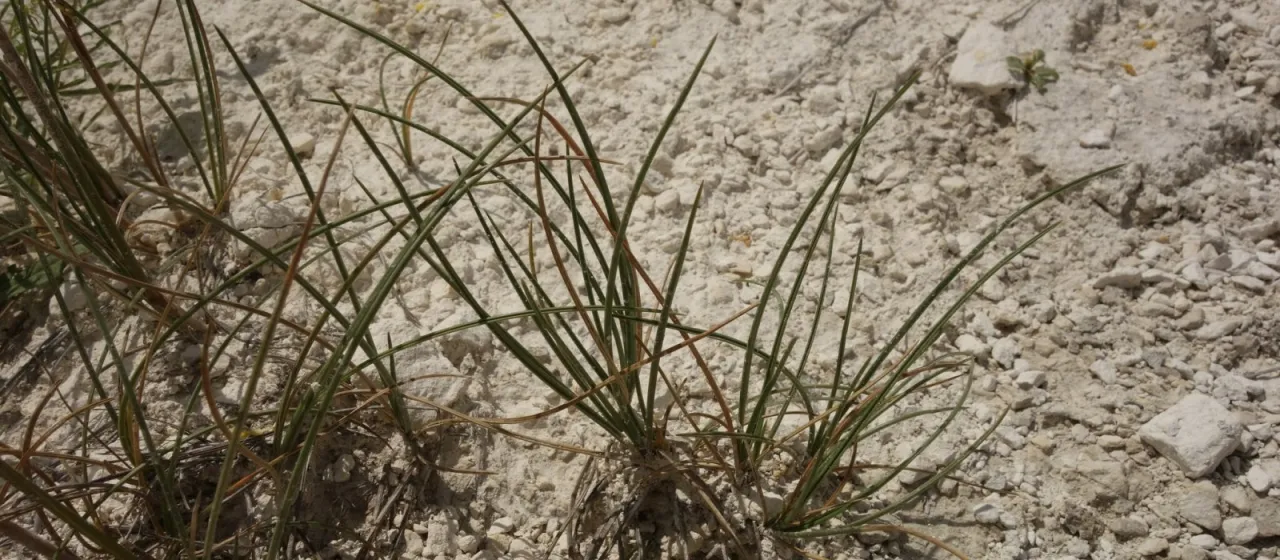
Description
Chalk fescue (Latin: Festuca cretacea) is a perennial grass species belonging to the Poaceae family. This species is native to specific steppe environments where it thrives on calcareous soils and chalk outcrops. Its biological adaptation to these extreme habitats makes it a specialized and resilient agricultural candidate.
The native distribution of this plant is primarily centered in the steppe and forest-steppe regions of Eastern Europe. It is commonly found in areas with high soil alkalinity, where other common agricultural grasses struggle to survive, making it a key species in maintaining the ecological balance of such sensitive landscapes.
Botanically, chalk fescue forms dense, tufted clusters with narrow, rigid leaves, which serve as a protective mechanism against dehydration. The root system is robust and extensive, designed to anchor the plant firmly in loose, stony, or nutrient-poor substrates, facilitating nutrient uptake even under harsh physiological drought conditions.
Regarding cultivation requirements, the species performs best in well-drained, alkaline soils. It is notably drought-tolerant and frost-hardy, requiring minimal fertilization due to its adaptation to nutrient-limited environments. In agricultural practice, it is often sown in mixtures to improve the ground cover density on marginal lands.
The primary agricultural utility of this crop is twofold: it is utilized in land reclamation projects to stabilize slopes and prevent erosion, and it serves as a source of hardy forage for livestock in arid regions. Its presence is vital for the long-term conservation of degraded soils and for providing biodiversity in pastoral systems.
- Excellent adaptation to calcareous and nutrient-poor soils.
- Strong erosion control capabilities.
- High tolerance to cold temperatures and drought.
- Valuable for landscape restoration and grazing management.