
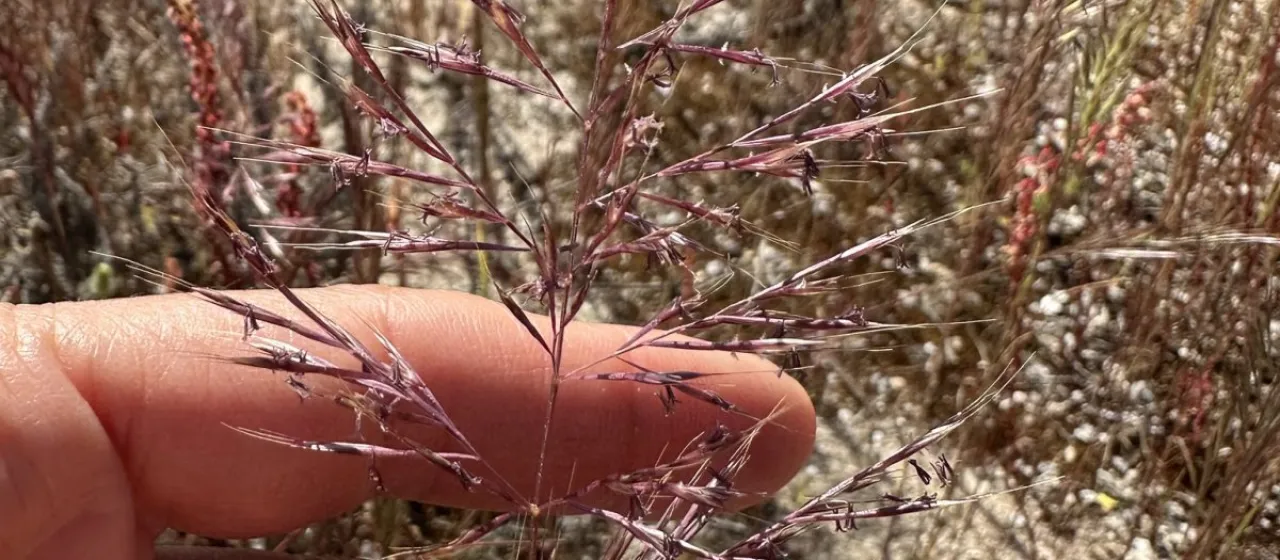
Description
Festuca geniculata is an annual grass species belonging to the Poaceae family. Primarily found in Mediterranean environments, this plant is well-adapted to habitats that experience distinct wet and dry seasons, making it a subject of interest for sustainable grassland management in arid regions.
The botanical structure of the plant features geniculate (bent) stems and narrow, linear leaves, which are highly efficient at reducing transpiration rates. The inflorescence is a panicle, typically appearing during the peak of the growing season. Its lifecycle is finely tuned to the available moisture, allowing the plant to set seeds before the onset of the severe summer drought.
Originating from the Mediterranean basin and extending into parts of the Middle East, the species thrives in sun-drenched, open areas. It is frequently observed in dry pastures and degraded landscapes, where it serves as a resilient component of the natural vegetation, capable of colonizing rocky or thin soils that are unsuitable for more sensitive crops.
Agricultural requirements for Festuca geniculata are modest. It prefers well-drained, neutral to alkaline soils and requires full solar exposure for optimal productivity. Unlike intensive forage crops, it does not rely on heavy irrigation or fertilizers, making it a low-input species suitable for extensive grazing systems where natural regeneration is prioritized.
The primary use of this species is as a forage resource for sheep and goats during the spring growth phase. However, as the plant matures, its digestibility decreases. Like many wild grasses, it may be susceptible to typical cereal diseases such as rusts and various blights if environmental conditions become overly humid. Proper pasture management and controlled grazing are essential to maintain the productivity of this grass.