
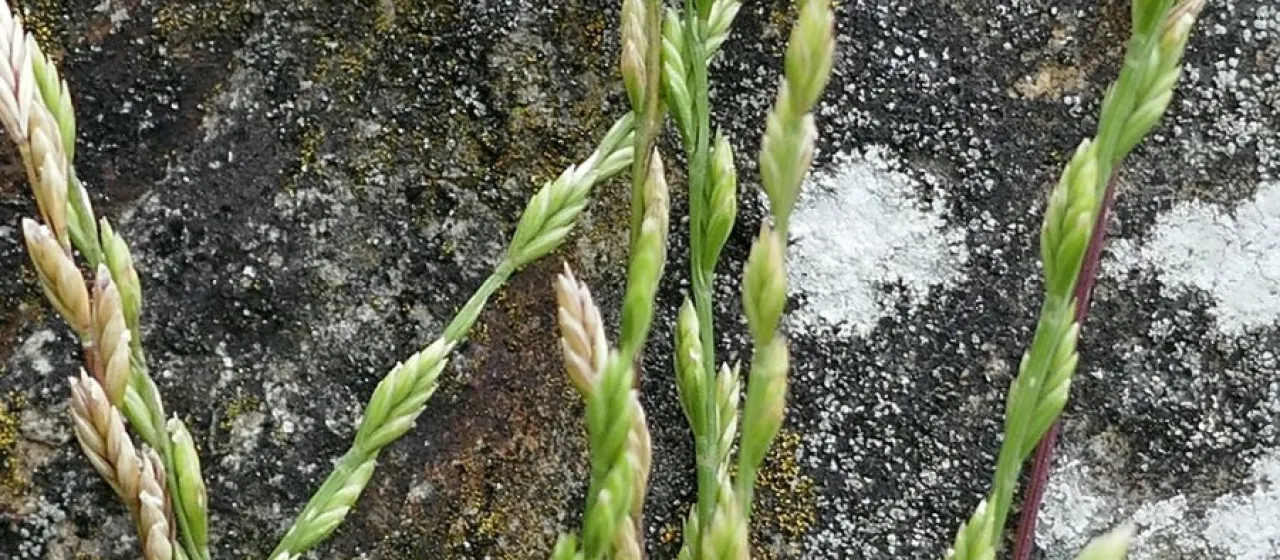
Description
Lachenal's fescue (Festuca lachenalii) is a perennial grass species belonging to the Poaceae family. In agricultural science, this plant is recognized for its hardiness and ability to thrive in challenging environments where more demanding forage species fail to establish. It serves as an essential component in managed grassland ecosystems.
The species is primarily native to mountainous regions and high-altitude grasslands across Europe. Its natural distribution is characterized by areas with rocky, well-drained soils and cool climates. Agriculturally, it is utilized in land reclamation projects and as a stable component of pasture mixtures in upland areas where soil fertility is naturally lower.
Botanically, the plant is distinguished by its dense, tufted growth habit, which provides excellent soil surface protection. Its leaves are typically narrow and folded, a morphological adaptation to minimize water loss. A deep, robust root system enables the plant to access subsoil moisture, ensuring its survival during seasonal dry spells and making it a reliable performer in harsh terrains.
The cultivation requirements focus on soil drainage and exposure. Lachenal's fescue thrives in well-ventilated, sunny sites and is intolerant of waterlogged or boggy soil conditions. Its management is generally low-input, requiring minimal fertilizer application due to its natural efficiency in nutrient cycling, which makes it an economical choice for extensive farming systems.
The primary agricultural use is forage for grazing livestock in upland areas and soil stabilization on slopes. To maintain optimal stands, producers should monitor for common risks:
- Rust diseases that appear during periods of high humidity.
- Soil-borne pathogens resulting from poor drainage.
- Invasive weeds that may colonize during the establishment phase.
- Loss of vigor due to overgrazing if stocking rates are not carefully managed.