
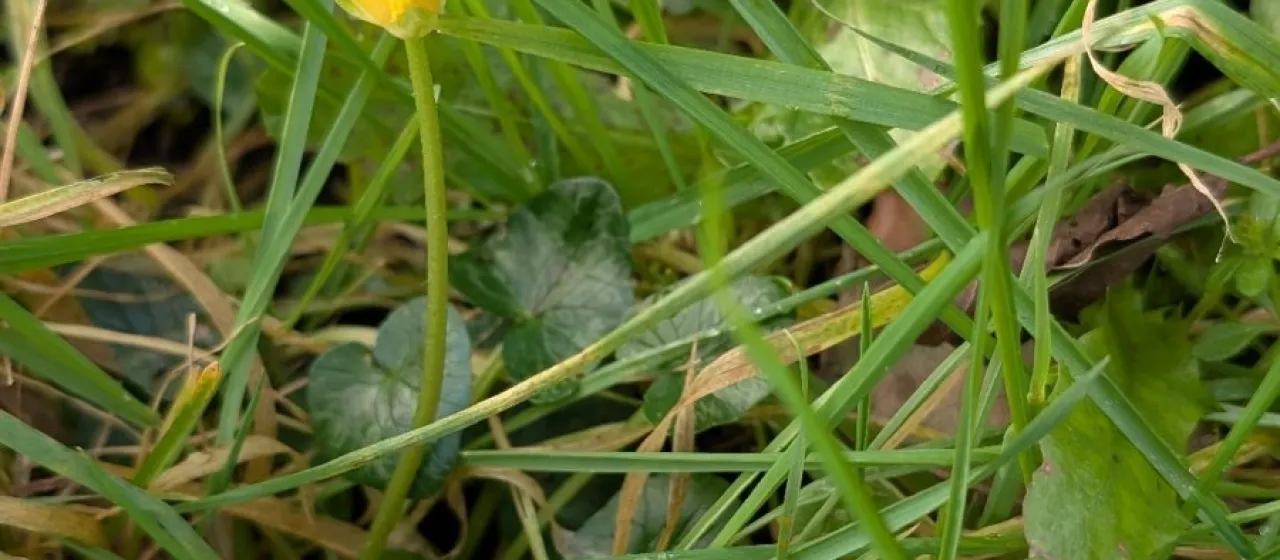
Description
Lesser celandine (lat. Ficaria verna) is a perennial herbaceous plant belonging to the Ranunculaceae family. While often considered a wild plant, it serves as a niche agricultural crop, valued primarily for its extremely early spring growth and high vitamin C content, making it a viable option for early-season greenhouse or garden production.
The native range of this species covers Europe, Western Asia, and parts of North Africa. In agricultural systems, it thrives in temperate climates, specifically in areas with damp, nutrient-rich soils. Due to its short life cycle, the plant completes its development before the canopy of trees fully closes or before summer heat triggers dormancy.
Botanically, the plant is characterized by its distinct tuberous roots, which act as storage organs for nutrients during the winter months. Its leaves are heart-shaped, smooth, and deep green, forming a low-lying rosette. The flowers are bright yellow and have a glossy texture, attracting early pollinators like bees and flies during the cool spring months.
Agronomic requirements for Ficaria verna focus on soil moisture and light management. It requires consistently moist, fertile, and well-drained soil. Because the plant naturally grows in woodland edges, it performs best in semi-shaded environments. Maintaining soil moisture during the spring thaw is the most critical factor for achieving a high-quality biomass yield.
The economic utility of the Lesser celandine is largely centered on its culinary potential as a spring green. Young leaves, harvested before flowering, are eaten fresh. From a health perspective, the plant is valued for its nutrient density, although producers must exercise caution, as mature plants can develop compounds that may be irritating if not processed correctly or harvested at the right stage.
- Excellent tolerance to cool and freezing weather.
- High reproductive rate through tuberous clusters.
- Minimal pest pressure due to short vegetation period.
- Valuable as an early source of nectar for pollinators.