
Description
Fimbristylis bisumbellata is an annual herbaceous plant belonging to the Cyperaceae (sedge) family. In agronomy, it is primarily recognized as a persistent weed found in wetlands, irrigated agricultural fields, and areas with poorly drained soils, where it can compete significantly with commercial crops like rice.
The species originated in tropical and subtropical regions of the Old World, with a native range extending across Africa, Asia, and Australia. Due to its high environmental adaptability, it has spread to various regions worldwide, particularly in warm climates where water availability is abundant throughout the year.
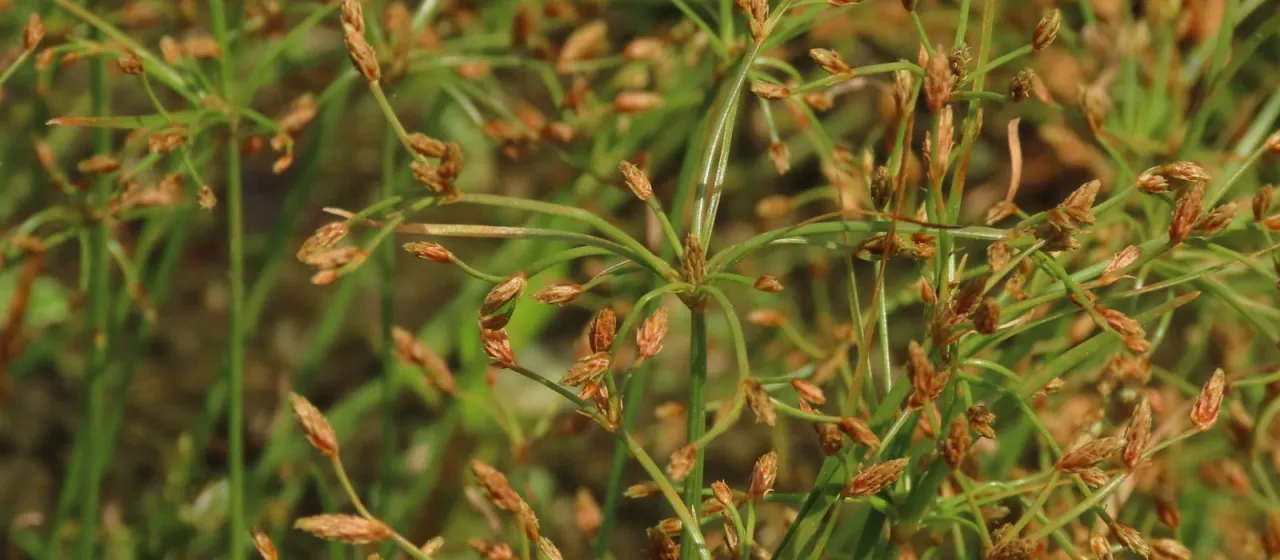
Botanically, the plant is characterized by thin, tufted stems growing up to 30 centimeters tall. The leaves are filiform and shorter than the culm. The inflorescence is a compound, anthelate umbel featuring numerous small, brownish spikelets. The seeds are small, smooth, or minutely tuberculate, which allows for effective dispersal via irrigation water.
Climate and soil requirements for Fimbristylis bisumbellata are centered on high moisture levels. It thrives in loamy or sandy-loam soils that remain saturated for long periods. It exhibits high tolerance to periodic inundation, making it a problematic weed in paddy fields where it benefits from the same water management practices intended for the rice crop.
Effective management and control in farming operations include the following strategies:
- Maintaining strict weed control in irrigation canals to prevent seed transport.
- Implementing integrated pest management (IPM) to reduce weed pressure.
- Utilizing selective post-emergence herbicides compatible with the primary crop.
- Manual weeding or mechanical cultivation during early growth stages if the crop density allows.
Regarding health status, the plant serves as a host for various pathogens, including leaf spots and rust fungi commonly found in sedge communities. While these diseases can naturally reduce the density of Fimbristylis populations, they are not typically managed as they would be for commercial crops. The plant remains an opportunistic species that occupies niches left vacant by other flora.