
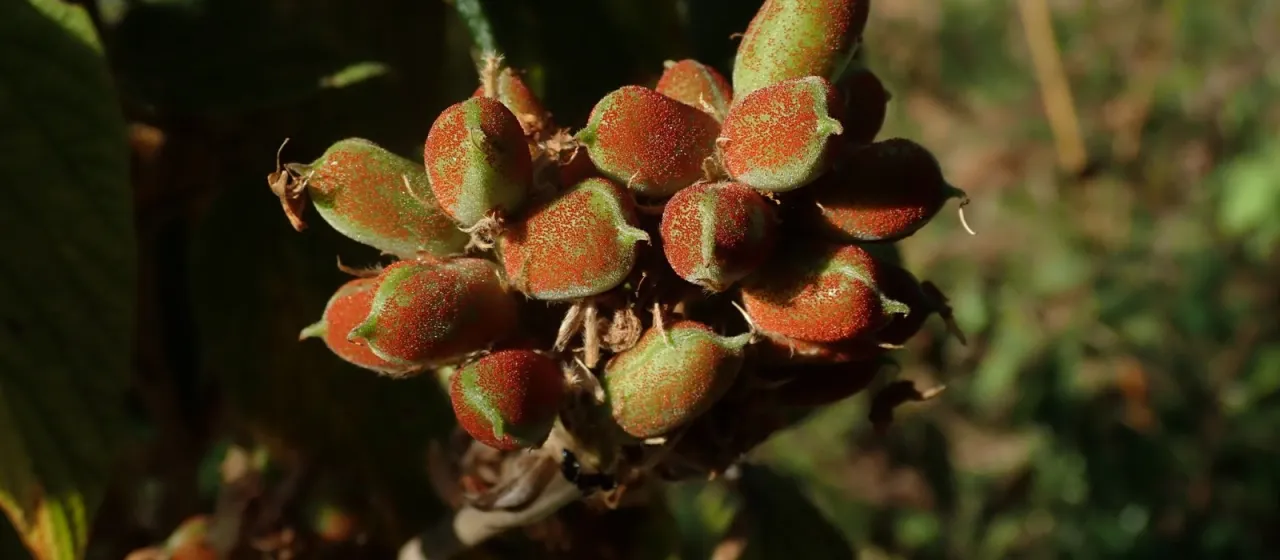
Description
Flemingia grahamiana is a perennial shrub that belongs to the Fabaceae family. This species is highly valued in tropical agricultural systems, particularly for its ability to enhance soil structure and its efficiency in contributing to sustainable agroforestry practices through nitrogen fixation.
The plant originates from tropical Africa, where it has historically played a role in the local ecosystems. Its cultivation range extends across various tropical zones, where it is used primarily as a cover crop or a soil-restoration tool to combat the degradation of agricultural lands in harsh tropical climates.
Botanically, it is characterized by its woody stems and trifoliate leaves, forming a dense canopy that effectively shades the ground. The plant possesses a robust root system capable of penetrating compacted soils, which is essential for improving water infiltration and preventing soil erosion in sloping terrains.
Regarding climate and soil requirements, the plant thrives in hot environments with consistent rainfall. It is versatile in terms of soil types but performs best in well-drained, slightly acidic soils. Good agrotechnical management includes periodic pruning, which stimulates vigorous vegetative growth and ensures high biomass yield for soil mulching.
Its primary agricultural and economic applications include:
- Utilizing leaf litter as nutrient-rich green manure for crops.
- Establishing living barriers to minimize wind erosion.
- Supporting livestock production as a supplementary forage source.
- Contributing to weed suppression by creating a dense ground cover.
Common agricultural challenges involve susceptibility to specific leaf-eating insects and potential root rot issues if the plant is grown in waterlogged conditions. Successful cultivation requires careful monitoring of pest populations and maintaining soil drainage to prevent fungal infections that could compromise plant development.