
Description
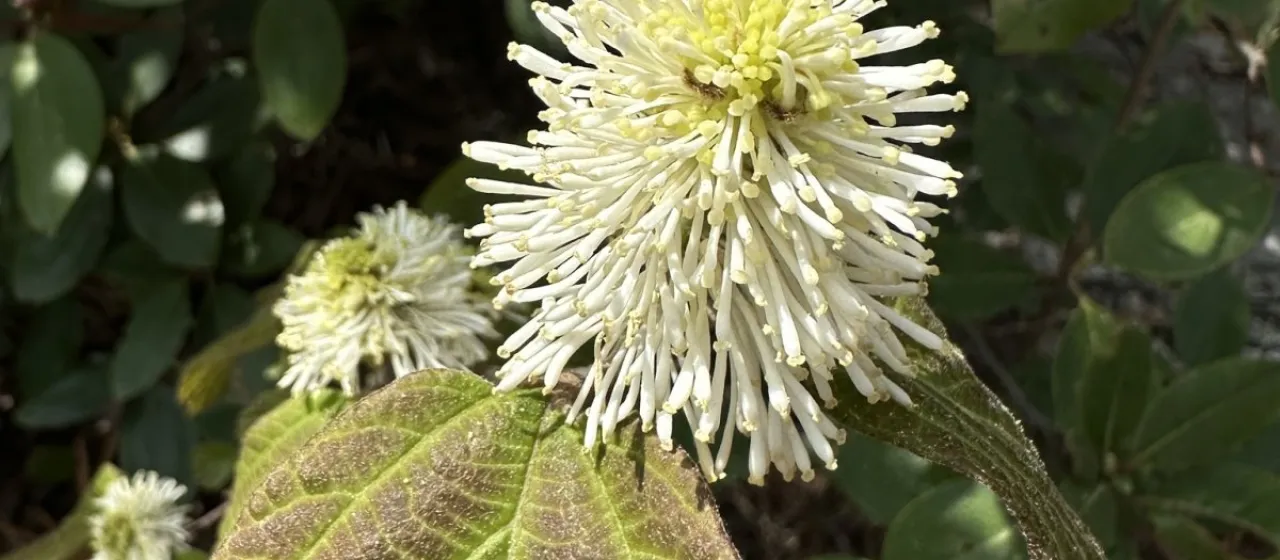
Mountain witch alder (Fothergilla monticola) is a deciduous shrub belonging to the Hamamelidaceae family. This ornamental plant is highly prized by landscape designers for its fragrant, white, bottle-brush-like flowers that bloom in early spring, as well as its spectacular fall foliage color, ranging from deep yellow to vibrant red.
The native range of this species is restricted to the southeastern United States, particularly within the Appalachian mountain regions. In its natural habitat, it thrives in moist, well-drained soils along forest edges and rocky slopes. Because of this, cultivation efforts should focus on replicating these environmental conditions to ensure healthy growth.
Botanically, it is a slow-growing, multi-stemmed shrub typically reaching heights of 3 to 6 feet. The leaves are alternate, ovate, and have a leathery texture. The blooms are not actually petals but showy white stamens, which lack petals entirely, giving the inflorescence a distinctive, fluffy appearance that emerges before the foliage develops.
Agricultural and horticultural requirements include planting in acidic, organic-rich soil that retains moisture but never becomes waterlogged. A location with morning sun and light afternoon shade is ideal, as this protects the foliage from scorching. Regular mulching is essential to keep the roots cool and to maintain the acidity levels preferred by the plant.
The primary use of Fothergilla monticola is in ornamental horticulture. It works exceptionally well in shrub borders, woodland gardens, and as a specimen plant. It is generally resistant to most pests and diseases, provided it is grown in a favorable site. Minimal pruning is required, mainly to remove dead or crowded branches to maintain airflow.
- Excellent fall color display.
- Fragrant honey-scented blooms.
- Prefers acidic soil conditions.
- Low maintenance shrub.