Fothergilla x intermedia
Fothergilla x intermedia Ranney & Fantz
Description
Fothergilla x intermedia is a hybrid deciduous ornamental shrub belonging to the Hamamelidaceae (witch-hazel) family. This plant is a hybrid cross between Fothergilla major and Fothergilla gardenii, specifically bred to combine the best traits of its parent species. It is widely recognized by horticulturists for its honey-scented spring blossoms and its spectacular autumn foliage, which turns brilliant shades of yellow, orange, and red.
The native distribution of its parent species is restricted to the southeastern United States. However, the hybrid Fothergilla x intermedia has been widely introduced into gardens across North America and Europe. It is well-adapted to temperate climates, thriving in regions that experience distinct seasonal transitions, which are essential for the plant to develop its full range of intense fall colors.
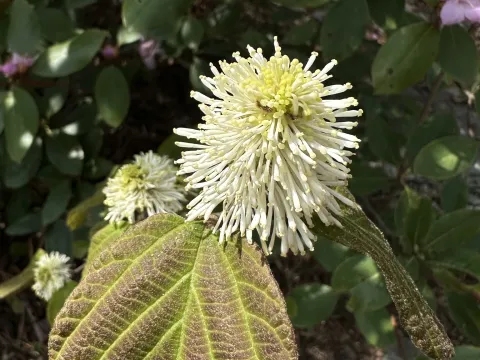
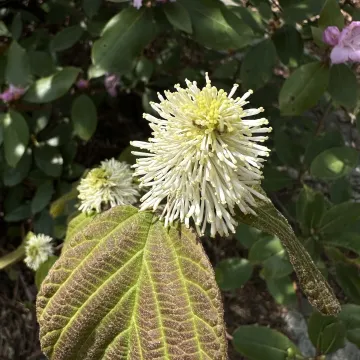
Botanically, this shrub is characterized by a slow growth habit, typically reaching heights of 1 to 2.5 meters. The most striking features are its bottlebrush-like inflorescences composed of numerous stamens without petals. These blooms appear in mid-spring, often preceding or appearing simultaneously with the leaves, providing a distinct structural and olfactory appeal in the early garden landscape.
Successful cultivation of this species requires well-drained, acidic to slightly acidic soils rich in organic matter. The shrub prefers sunny to partially shaded locations but demands consistent soil moisture to thrive, as it is relatively intolerant of prolonged drought conditions. Basic maintenance includes applying an organic mulch around the base to retain moisture and utilizing fertilizers designed for acid-loving ericaceous plants.
The primary use for Fothergilla x intermedia is in ornamental horticulture. Its versatility allows it to be incorporated into various landscape designs, including:
- Standalone specimens for focal points in garden beds.
- Mass plantings in woodland settings.
- Border plantings alongside other acid-loving shrubs like rhododendrons and azaleas.
- Naturalistic hedges that provide multi-seasonal interest.
One of the significant advantages of growing this shrub is its excellent resistance to common pests and diseases. Unlike many other flowering shrubs, it rarely suffers from major infestations. Occasionally, if planted in unsuitable alkaline soil, the plant may exhibit chlorosis, but with appropriate soil management, it remains a low-maintenance, reliable, and highly attractive addition to any garden landscape.
Photo gallery