Red valerian
Centranthus ruber (L.) DC.
Description
Red valerian (Centranthus ruber) is a robust perennial flowering plant belonging to the Caprifoliaceae family. Often confused with the true valerian (Valeriana officinalis) due to common names, this species is primarily valued for its outstanding ornamental qualities and ability to thrive in challenging gardening environments.
Native to the Mediterranean region, red valerian has a natural habitat consisting of rocky cliffs, scree slopes, and walls. Its wide distribution today spans across Europe, North America, and other temperate regions. It has adapted remarkably well to urban environments, often appearing in rock gardens and landscapes that mimic its rugged native origins.
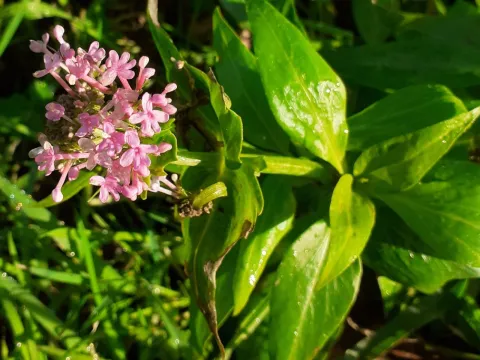
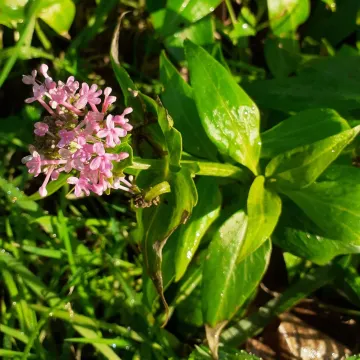
The plant features succulent-like, glaucous leaves and reaching heights of 60 to 90 cm. Its most distinctive feature is the mass of fragrant, star-shaped flowers organized in dense clusters. The bloom color palette ranges from deep crimson red to soft pink and pure white, creating a spectacular display from late spring through late summer.
Regarding climate and soil, red valerian is exceptionally drought-tolerant once established. It requires full sun exposure and thrives in poor, alkaline, well-draining soils. Excessive fertility and moisture are detrimental to the plant, as they encourage legginess and root rot. Regular maintenance consists mainly of deadheading spent flower stalks to encourage a second flush of blooms.
In landscaping, red valerian is widely used for dry stone walls, gravel gardens, and drought-tolerant borders. It is an excellent choice for wildlife gardens, as the nectar-rich flowers are highly attractive to butterflies, bees, and other pollinators. Due to its hardiness and low resource requirements, it is considered a low-maintenance plant for modern sustainable landscapes.
Pests and diseases are generally minor concerns for this species. The main threat is root rot caused by poor soil drainage or excessive irrigation. Slugs and snails can cause damage to young foliage in the spring. Provided with the right sunny and well-drained spot, the plant remains highly resistant to common garden diseases and pests throughout its life cycle.
Photo gallery