
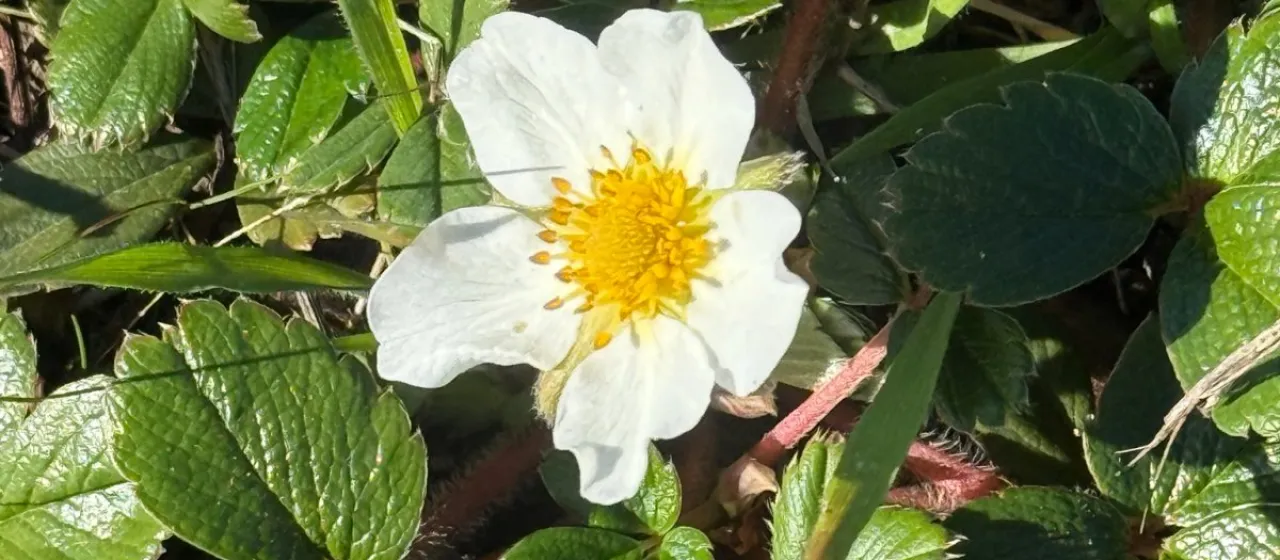
Description
Beach strawberry (Fragaria chiloensis) is a perennial plant belonging to the Rosaceae family. It is historically significant as one of the two main parent species of the modern garden strawberry, having been brought to Europe and hybridized in the 18th century.
The species is native to the coastal regions of North and South America, particularly Chile and the Pacific coast. It is naturally adapted to sandy, well-drained soils and maritime climates, where it often forms dense mats that help stabilize dunes and prevent soil erosion.
Botanically, this plant is characterized by its thick, evergreen, leathery leaves and relatively large, fleshy berries. Unlike many other species, Fragaria chiloensis can exhibit dioecious tendencies, meaning individual plants may produce only male or female flowers, which is a critical factor for fruit production management.
Cultivation requires specific environmental conditions, including mild temperatures and well-draining, slightly acidic soil. It is particularly sensitive to waterlogged conditions, which can trigger crown rot. Agricultural practices should focus on maintaining a balanced moisture level, proper spacing for airflow to prevent fungal issues, and providing adequate organic matter.
- Adaptation to saline environments.
- Excellent genetic source for fruit firmness.
- Resistance to certain soil-borne pathogens.
- Need for cross-pollination in dioecious populations.
From an agricultural standpoint, its primary value lies in its germplasm, which contributes to the development of commercial strawberry varieties with superior shelf life and transportability. While not widely grown as a standalone commercial crop, its biological traits remain indispensable for modern horticultural research and plant breeding programs worldwide.