
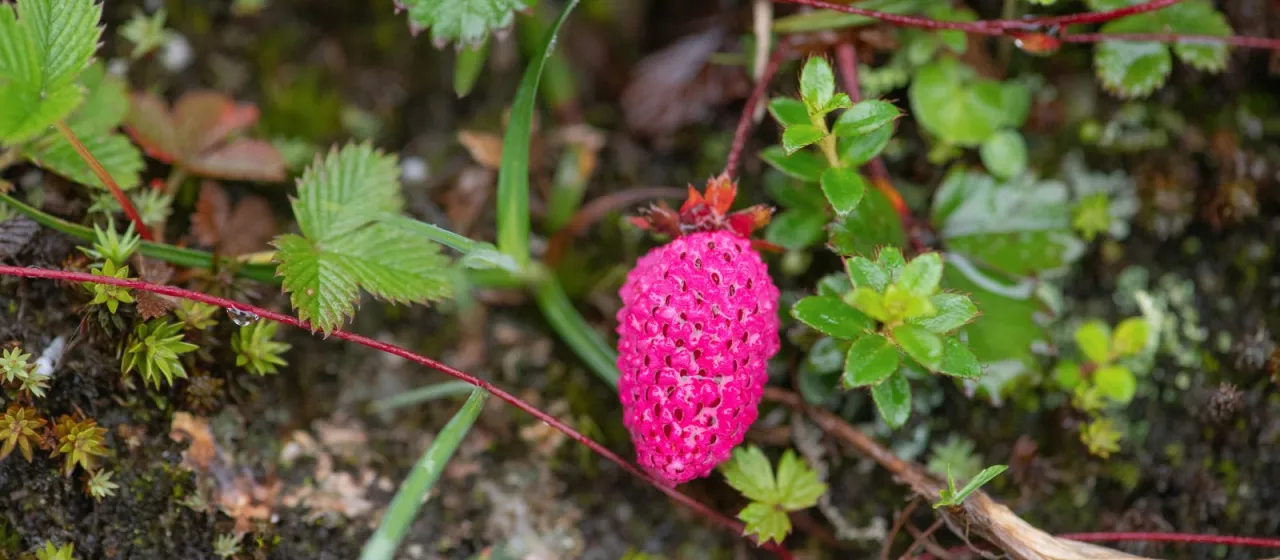
Description
Dalton's strawberry (Fragaria daltoniana) is a perennial herbaceous plant belonging to the Rosaceae family. As a wild relative of the common garden strawberry, this species is noted for its specialized adaptation to extreme high-altitude environments, making it a subject of interest for both botanical research and amateur gardening enthusiasts.
The native range of Fragaria daltoniana is strictly confined to the high-mountain regions of the Himalayas. It is primarily distributed across Nepal, Bhutan, Northern India, and high-elevation areas in China. It typically thrives in alpine meadows and the edges of subalpine forests at altitudes ranging from 3,000 to over 4,500 meters, where it remains exposed to fluctuating temperatures and intense ultraviolet light.
Morphologically, this species is characterized by its small, compact rosette of trifoliate leaves. The flowers are typically white, and the fruits stand out due to their distinctively elongated, spindle-like shape and bright red coloration. The plant produces stolons, allowing for vegetative propagation, which is critical for its survival in fragmented mountain habitats.
Cultivating Dalton's strawberry requires replicating its native high-altitude environment. It demands cool, humid conditions and well-draining, slightly acidic soil rich in organic matter. In lowland climates, it is essential to provide partial shade and consistent moisture to prevent the plant from succumbing to heat stress. It is not a drought-tolerant plant and thrives best in regions with mild summers.
The practical and economic usage of this species is relatively niche but promising:
- Utilization in plant breeding to introduce genes for cold hardiness into commercial strawberry lines.
- Use as an ornamental groundcover for rock gardens and cold-climate landscapes.
- Investigation of wild-harvested fruits for local traditional food sources in Himalayan communities.
Regarding pest and disease management, the species is susceptible to standard strawberry pathogens, including powdery mildew and Botrytis cinerea (gray mold). These conditions are particularly prevalent in greenhouse settings if air circulation is poor. Pests such as spider mites and leaf beetles can cause damage if populations go unchecked. Success in cultivation often depends on preventing these issues through strict sanitation and maintaining an optimal microclimate.