
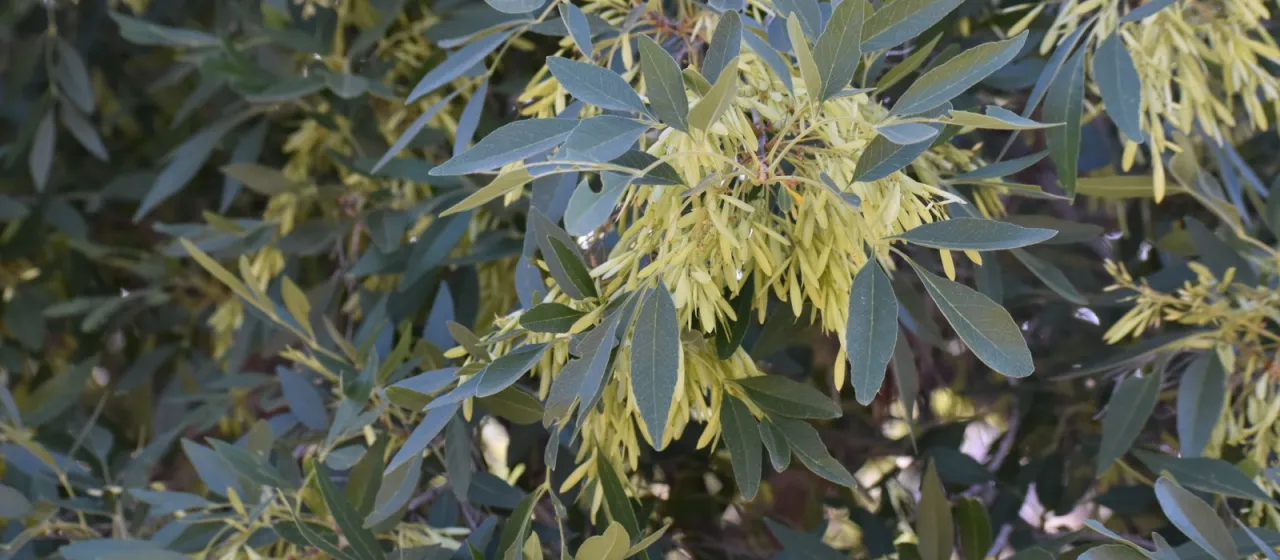
Description
Velvet ash (Fraxinus velutina) is a deciduous tree belonging to the Olive family (Oleaceae). The species is named for the fine, velvet-like hairs covering its young twigs and leaflets. It typically grows into a medium-sized tree, reaching heights of 30 to 50 feet with a rounded or spreading crown that provides effective shade.
The native range of this tree covers the Southwestern United States and Northern Mexico. It is specifically adapted to arid and semi-arid regions, commonly found in riparian zones or near seasonal streams. Due to its natural resilience, it has been widely planted as an ornamental and shade tree in various warm-climate regions globally.
Botanically, the species features pinnately compound leaves consisting of several narrow, pointed leaflets. The bark is gray and develops deep fissures as the tree matures. As a dioecious plant, it produces small, inconspicuous flowers in early spring before the foliage appears, followed by the development of winged seeds known as samaras that facilitate effective wind-based dispersal.
Cultural requirements for velvet ash are relatively straightforward. It is highly adaptable to a variety of soil types, including those that are alkaline or saline. While the tree shows exceptional drought tolerance once established, initial irrigation is necessary during the first two years of growth. Minimal pruning is required, primarily to maintain a healthy structure and remove dead wood.
Economically, the tree is primarily utilized in landscaping, parks, and erosion control programs in desert environments. It is a preferred choice for urban forestry in regions with high temperatures. Growers should remain vigilant against common threats such as the emerald ash borer and various fungal leaf spot diseases, ensuring that trees are monitored regularly to maintain their long-term health.