
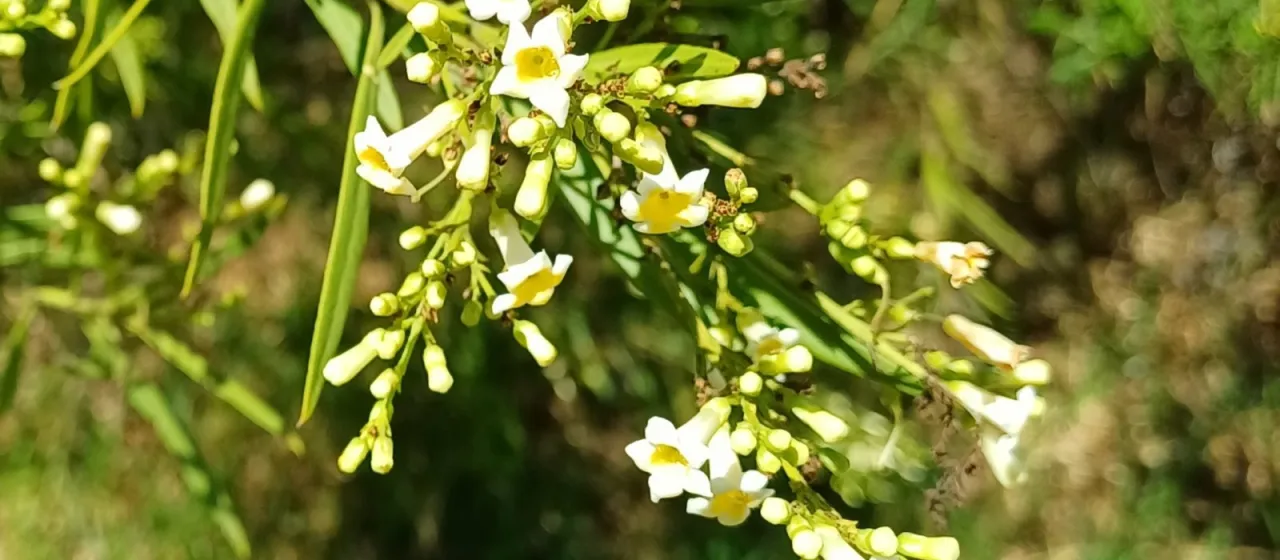
Description
Honey bell bush (scientific name: Freylinia lanceolata) is an evergreen shrub belonging to the Scrophulariaceae family. Known for its slender growth habit and graceful appearance, it serves as a highly sought-after ornamental plant in regions with suitable mild climates.
The plant originates from South Africa, specifically found in riverine areas and damp habitats. Its natural adaptation to moist environments defines its cultivation requirements in modern gardening. It is primarily grown in subtropical and warm temperate zones where frost risk is minimal, as severe cold can cause significant damage to its foliage.
Botanically, this shrub is characterized by its lance-shaped, dark green leaves and clusters of small, fragrant, tubular flowers. These flowers often appear in shades of yellow or white, creating a striking contrast against the foliage. The plant can reach significant heights, often requiring pruning to maintain a desirable shape and to encourage denser branching.
In terms of agrotechnics, it thrives in well-drained, nutrient-rich soils with consistent moisture availability. While it appreciates regular irrigation, waterlogging should be strictly avoided to prevent root rot. It performs best in positions with full sun to partial shade, which allows for maximum flower production during the blooming season.
- Requires moderate annual pruning for shape.
- Thrives in organic-rich soil types.
- Responsive to balanced liquid fertilizers.
- Sensitive to heavy frosts and freezing conditions.
The shrub is primarily used in landscape architecture as a feature plant or for forming screening hedges. Common pests include aphids and mites, which can be managed with standard horticultural oils. Disease prevention is largely achieved through proper spacing and airflow, which minimizes the risks associated with fungal pathogens in humid environments.