
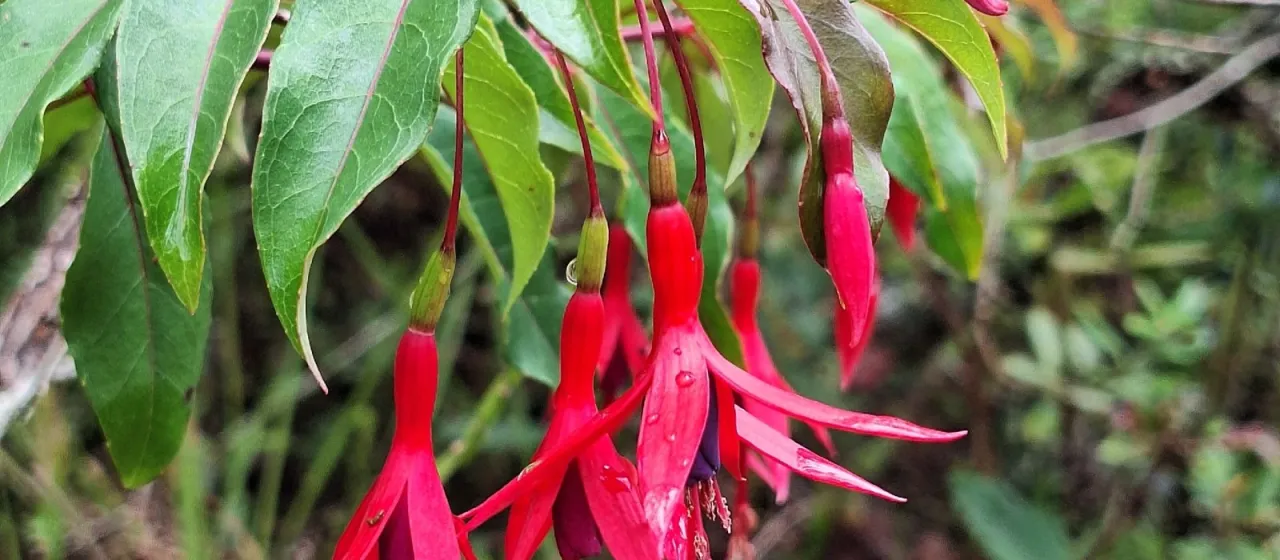
Description
Royal fuchsia (Fuchsia regia) is a perennial woody shrub belonging to the Onagraceae family. Unlike many annual fuchsia hybrids, this species is noted for its vigorous growth and semi-hardy nature. It is highly valued in horticulture for its elegant pendant flowers and its ability to withstand slightly cooler conditions than other popular members of the genus.
Originating from the mountainous regions of Brazil, this species naturally inhabits humid, forested environments. In an agricultural or garden setting, it thrives in regions that mimic its native climate, characterized by mild temperatures and high atmospheric humidity. It is frequently grown in subtropical regions as a permanent landscape feature or in containers in temperate climates.
The botanical features of Fuchsia regia include persistent, often woody stems and dark green, opposite leaves. Its flowers are distinct due to the elongated calyx and typically rich, vibrant colors. When successfully pollinated, the plant produces succulent, edible berries, which is a unique trait among many ornamental fuchsias that are typically grown only for their blooms.
For successful cultivation, the plant requires a well-draining, nutrient-rich soil with a slightly acidic pH level. It prefers partial shade, as intense direct sunlight can damage the foliage and stress the plant. Proper maintenance includes consistent moisture management—watering should be sufficient to keep the roots hydrated but not waterlogged, which is a common cause of failure in container gardening.
The main horticultural uses include ornamental planting in public gardens, greenhouses, and large conservatory arrangements. Common pests affecting this species include whiteflies and spider mites, which are particularly prevalent in greenhouse conditions. Disease management focuses on preventing root rot and fungal leaf spots through proper spacing and excellent ventilation, ensuring the long-term health of the crop.