
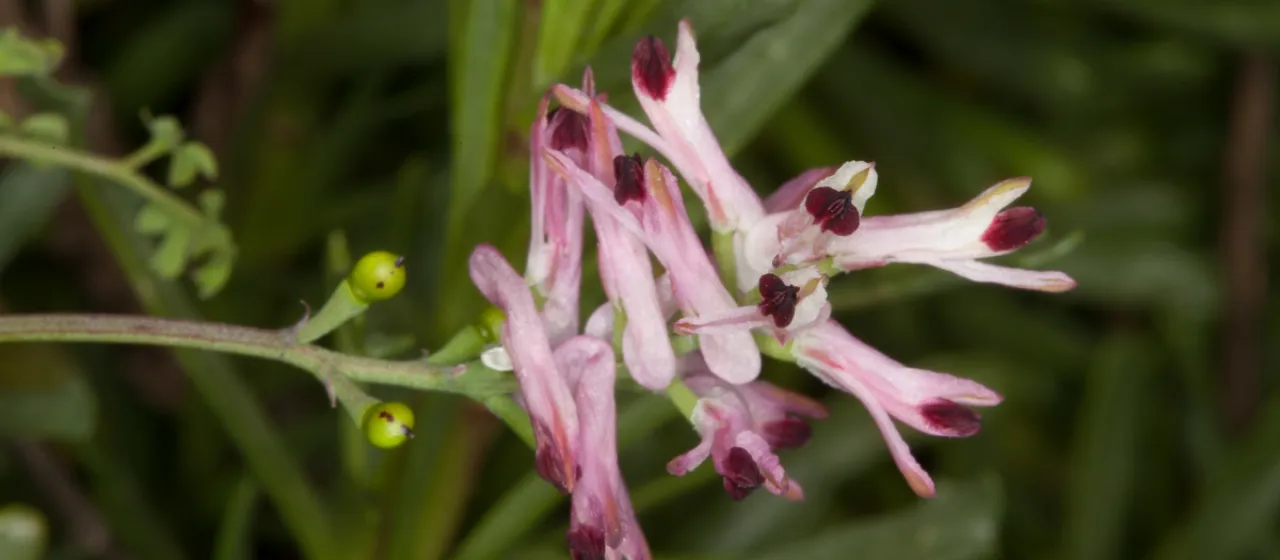
Description
The two-colored fumitory (Fumaria bicolor) is an annual herbaceous plant belonging to the Poppy family (Papaveraceae). It is a botanical species characterized by its distinct floral morphology and a specific growth pattern that makes it a common feature in Mediterranean agricultural landscapes.
The plant originates from Southern Europe and the Mediterranean basin, where it thrives in various habitats, including cultivated fields, pastures, and disturbed soil areas. It prefers moderate moisture and well-aerated soils, which are typical for many arable farming regions.
Botanically, the plant develops thin, branching stems and finely divided leaves. The most defining feature is the inflorescence, which consists of small, two-toned flowers. This unique coloration differentiates it from other species within the Fumaria genus, aiding in its identification in the field.
Agricultural management of the two-colored fumitory primarily focuses on weed control. It competes with crops for soil nutrients and light, potentially reducing yield. Effective control strategies involve conventional tillage practices, crop rotation, and the judicious use of selective herbicides during the early stages of weed germination.
While this plant does not have significant commercial value in modern industrial agriculture, it remains an important subject for botanical studies and field ecology. Understanding its life cycle and reproductive strategy is essential for agronomists to maintain healthy crop conditions and mitigate the competitive pressure it exerts on primary crops.
- Family: Papaveraceae
- Life cycle: Annual
- Habitat: Mediterranean, Europe
- Distinctive feature: Bicolored flowers
- Control status: Agricultural weed