
Description
Palestine fumitory (Latin: Fumaria judaica) is an annual herbaceous plant belonging to the Poppy family (Papaveraceae). While it is not a traditional crop, it is a significant botanical entity in its native regions, often interacting with agricultural landscapes as a wild plant or a weed species within cultivated areas.
The plant originates from the Eastern Mediterranean region, with a primary distribution range covering parts of Israel, Jordan, and surrounding territories. It thrives in various habitats, ranging from rocky slopes and Mediterranean scrublands to disturbed agricultural fields. It is remarkably resilient to arid conditions, which allows it to flourish in semi-arid environments where other flora might struggle.
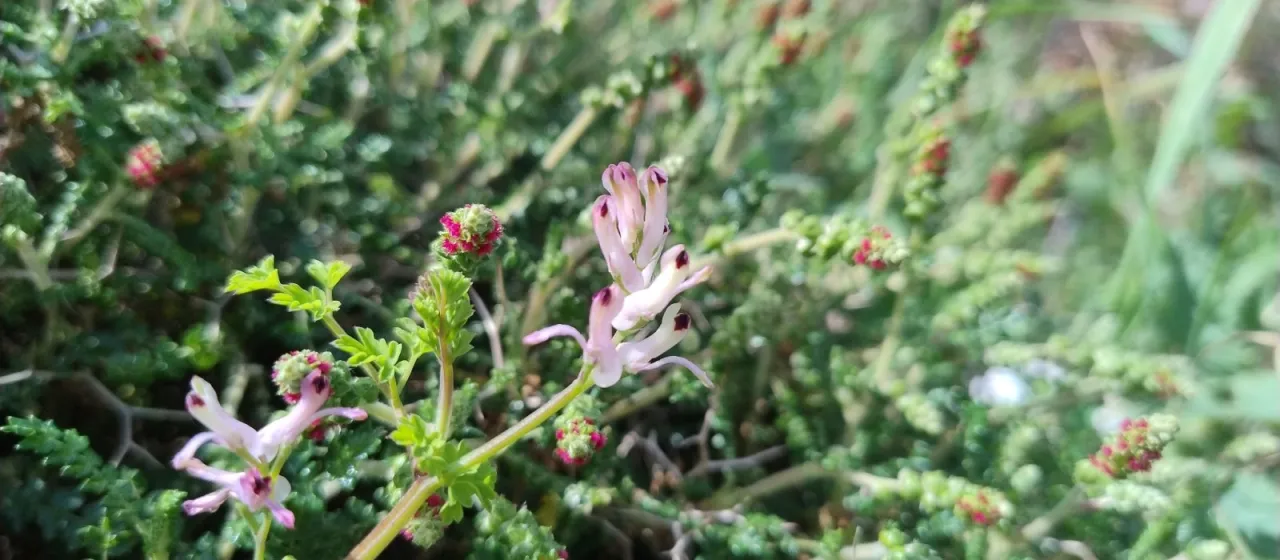
Botanically, Fumaria judaica is characterized by its delicate, glaucus-green foliage and racemes of small, tubular flowers. The flowers are typically pink with darker, purplish tips, which are a distinguishing feature of the species. The plant typically germinates in the cool, wet season and sets seed as the temperatures begin to rise in late spring, ensuring the survival of the species through the summer drought.
From an agronomic perspective, managing the Palestine fumitory involves understanding its life cycle as a winter annual. Effective control methods include early-season cultivation, the use of selective herbicides in cereal crops, and the maintenance of field borders to prevent seed dispersal into agricultural zones. The plant prefers light, well-draining soils but can adapt to a variety of pH levels common in its native range.
The economic and research interest in Fumaria judaica is centered on its phytochemical profile. Like many members of the genus Fumaria, it contains alkaloids that are studied for their potential medicinal properties. However, it remains a wild plant, and its primary interaction with human activity is through the competition it provides to commercial crops. Common pests affecting the plant include aphid species, while fungal infections can occur during periods of unseasonable high humidity.