
Description
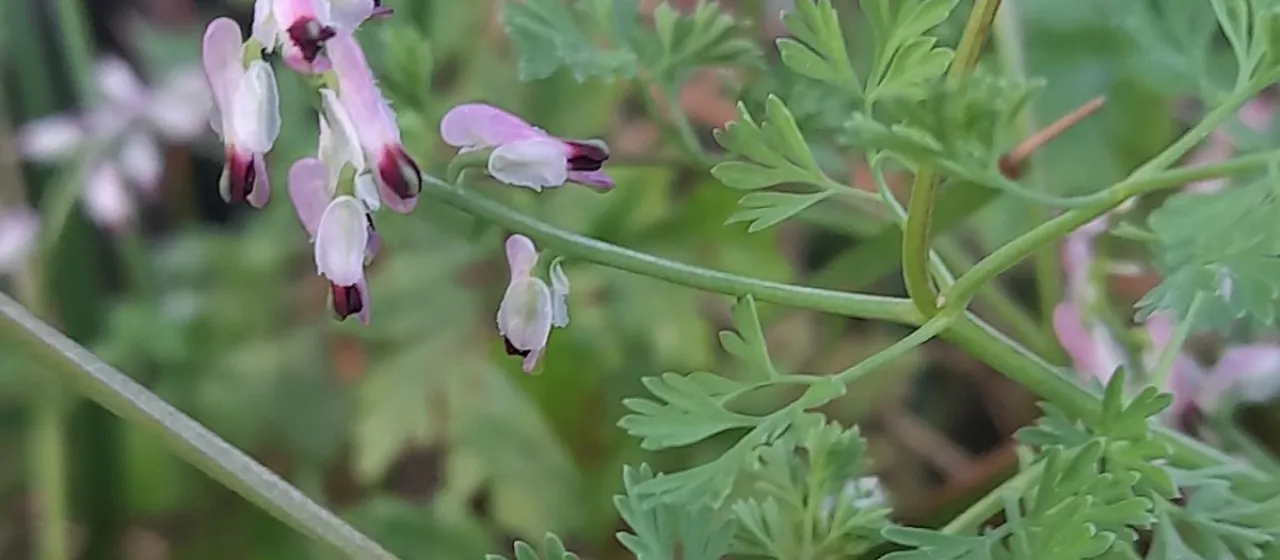
Kralik's fumitory (Fumaria kralikii) is an annual herbaceous plant belonging to the Papaveraceae family. In an agronomic context, it is typically categorized as a field weed that competes with various crops for soil nutrients and solar energy, particularly in the Mediterranean and continental climate zones.
The plant originates from the regions of Southern Europe, the Caucasus, and parts of Central Asia. Its natural habitat is characterized by disturbed soils, such as fallow fields, field margins, and orchards, where the vegetation cover is occasionally broken by human agricultural activities.
Botanically, it features a sprawling, branched stem with delicate, finely divided leaves. The inflorescences consist of small, tubular flowers with purple or pinkish hues. The root system is relatively shallow, which is a key weakness that allows for manual or mechanical weeding during the early stages of plant growth.
Regarding cultivation and soil requirements, Fumaria kralikii thrives in well-aerated soils and prefers moderate moisture levels. Standard agronomic practices, including crop rotation and the application of targeted herbicides, are effective in managing populations of this species to prevent economic losses in primary crops.
While not a commercially cultivated crop, it possesses botanical interest due to the presence of specific alkaloids. From a practical agricultural perspective, the primary concern is the plant's ability to propagate rapidly via seeds, necessitating consistent monitoring to avoid the buildup of a seed bank in the soil.
- Effective seed dispersal mechanisms
- Competitive growth in spring
- High adaptability to tillage
- Sensitivity to specific broad-spectrum herbicides