
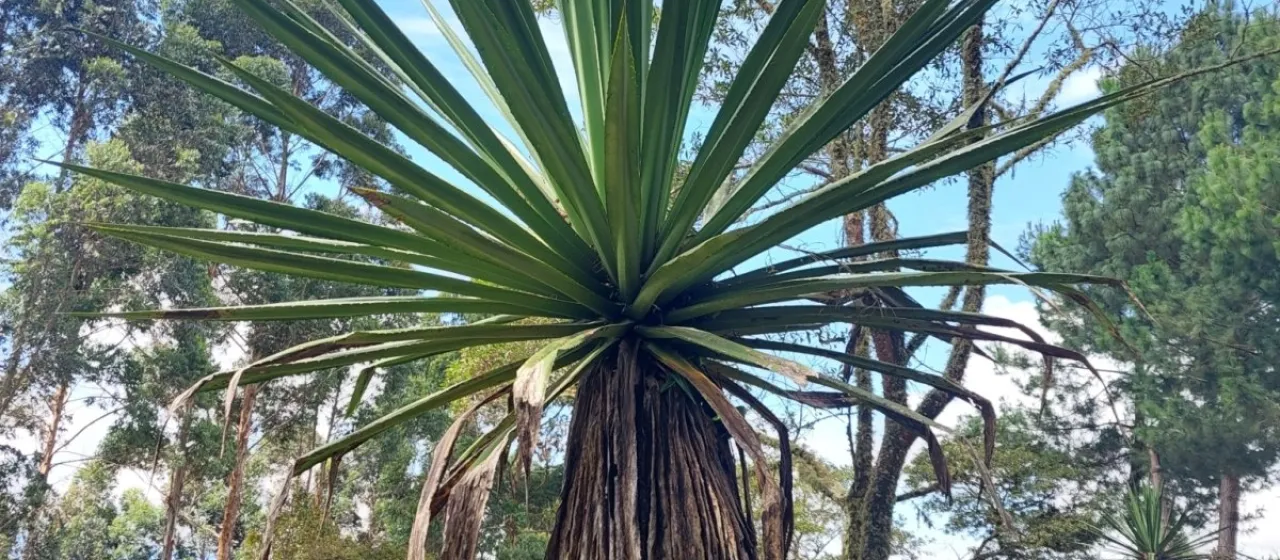
Description
Furcraea cabuya is a perennial succulent plant belonging to the Asparagaceae family. This hardy species is structurally similar to agaves and is highly valued in agriculture as a primary source of high-quality fiber derived from its thick, succulent, and elongated sword-shaped leaves.
The plant originates from the tropical regions of Central and South America, particularly common in countries like Costa Rica, Panama, and Colombia. It has been widely distributed across tropical belts worldwide, where it thrives in diverse ecological conditions ranging from coastal lowlands to higher altitude mountain slopes.
Botanically, the plant is characterized by a short stem and a large rosette of leaves that can reach lengths of over 2 meters. The leaves are firm, often armed with marginal spines, and covered in a waxy cuticle that aids in water retention. A unique feature is its monocarpic blooming behavior, producing a tall inflorescence that bears bulbils for vegetative propagation.
Agronomic requirements are focused on well-drained soils, as the species is highly susceptible to root rot in waterlogged conditions. It is drought-tolerant and prefers sunny locations with moderate temperatures. Proper cultivation involves strategic spacing to ensure adequate airflow and sunlight penetration, which helps prevent pest infestations and optimizes leaf development.
- Requires well-draining soil (sandy loam is ideal).
- Highly drought resistant once established.
- Mainly propagated via bulbils from the flower stalk.
- Harvesting frequency depends on regional climate conditions.
The industrial use of Furcraea cabuya is centered on its strong, rot-resistant fiber, historically referred to as "cabuya." This fiber is essential for manufacturing heavy-duty ropes, agricultural twine, bags, and fishing nets. Pest management typically involves integrated practices to control leaf-mining insects and weevils, while fungal diseases are generally controlled through moisture management and proper site selection.