
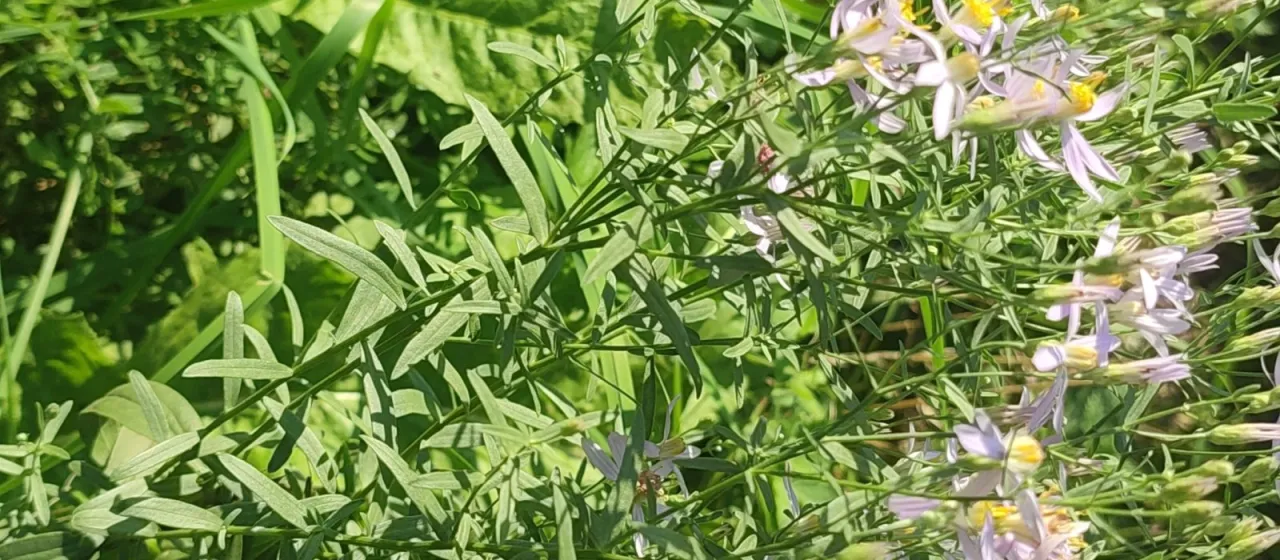
Description
Galatella dracunculoides is a perennial herbaceous plant belonging to the Asteraceae family. In an agricultural context, it is recognized as a hardy, drought-tolerant species capable of thriving in saline or arid environments where many conventional crops would fail. Its biological resilience makes it an interesting candidate for ecological land management.
The native range of this species covers the vast steppe and forest-steppe zones of Eurasia, including parts of Eastern Europe, Central Asia, and Siberia. It is typically found in open, sun-exposed habitats, such as dry meadows, rocky slopes, and alkaline soils. The plant is evolutionarily adapted to cope with limited rainfall and high solar radiation.
Botanically, the plant features an erect stem with narrow, linear leaves, which gives it a resemblance to tarragon, hence the specific epithet dracunculoides. The inflorescences consist of small, yellow flower heads arranged in corymb-like clusters at the top of the stem. A robust taproot system allows the plant to access moisture from deeper soil layers, contributing to its survival in dry conditions.
Cultivation requirements involve ensuring well-drained soil conditions and sufficient spacing to prevent competition for light. While the plant is undemanding in terms of nutrient input, it responds well to standard agricultural practices that focus on soil aeration. Propagation is typically achieved through seeds, although vegetative division of the rootstock is a viable method for established stands.
The primary economic uses for Galatella dracunculoides include soil restoration and beekeeping. As a late-blooming nectar source, it provides essential forage for pollinators during the mid-to-late summer months. Furthermore, recent interest in its secondary metabolites suggests potential applications in the development of natural extracts with bioactive properties.
- Exceptional drought and salinity tolerance
- High value as a late-season honey plant
- Minimal fertilization requirements
- Resilience against structural soil degradation
Regarding pest and disease management, the plant is relatively robust. However, it may be susceptible to root rot in cases of waterlogging or poor drainage. Protecting the crop requires avoiding low-lying areas with stagnant water and maintaining a healthy plant density to ensure adequate airflow, which prevents the development of fungal pathogens.