
Description
The bifid hemp-nettle (Galeopsis bifida) is an annual herbaceous plant belonging to the Lamiaceae family. In agricultural settings, it is primarily categorized as an aggressive weed that colonizes arable land, competing with cereals, vegetables, and fodder crops for soil nutrients, water, and sunlight throughout the growing season.
The species is widely distributed across temperate regions of Eurasia and has been introduced to other parts of the world. It thrives in diverse environments, often appearing in fields with moderate to high soil moisture. Its ability to adapt to varying soil types, ranging from sandy loams to heavy clays, makes it a resilient plant that persists in many agricultural landscapes.
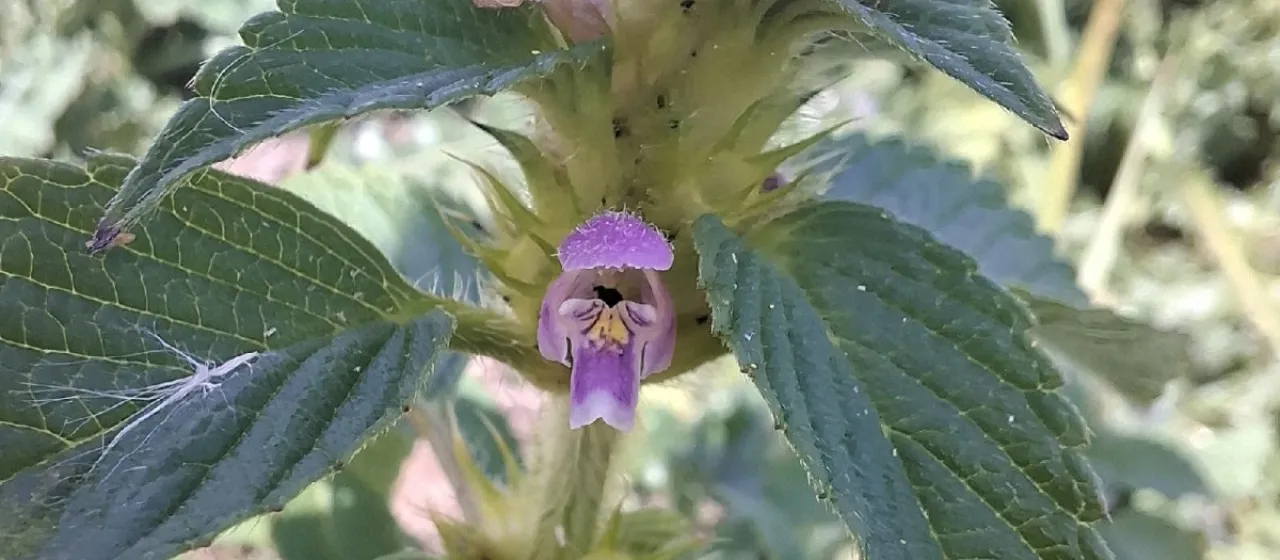
Botanically, the plant is characterized by an erect, branched stem reaching 20–80 cm in height, with nodes covered in stiff, glandular hairs. The leaves are opposite and ovate-lanceolate with serrated margins. The inflorescences are dense whorls of flowers with a purple or pale pink corolla, distinguished by a deeply bifid (two-cleft) lower lip, which is a key identifying trait for this specific taxon.
The bifid hemp-nettle has high reproductive potential, as a single plant can produce several thousand seeds. These seeds exhibit prolonged viability, allowing them to remain in the soil seed bank for several years. This characteristic requires strict adherence to agronomic practices, such as precise weed monitoring and the use of competitive crop varieties to suppress early development.
Management strategies focus on reducing the seed bank and preventing plant maturation:
- Implementation of early spring tillage to destroy young seedlings.
- Application of selective post-emergence herbicides during active growth.
- Utilization of mulching or dense crop canopy to minimize light penetration.
- Prevention of seed maturation through mechanical mowing or harvest timing.
While often viewed as a nuisance to farmers, the bifid hemp-nettle is ecologically significant as a late-summer nectar source for various pollinators. However, from a phytosanitary perspective, it acts as a secondary host for several pests and diseases, necessitating constant surveillance to protect primary crop yields and maintaining healthy field conditions.