
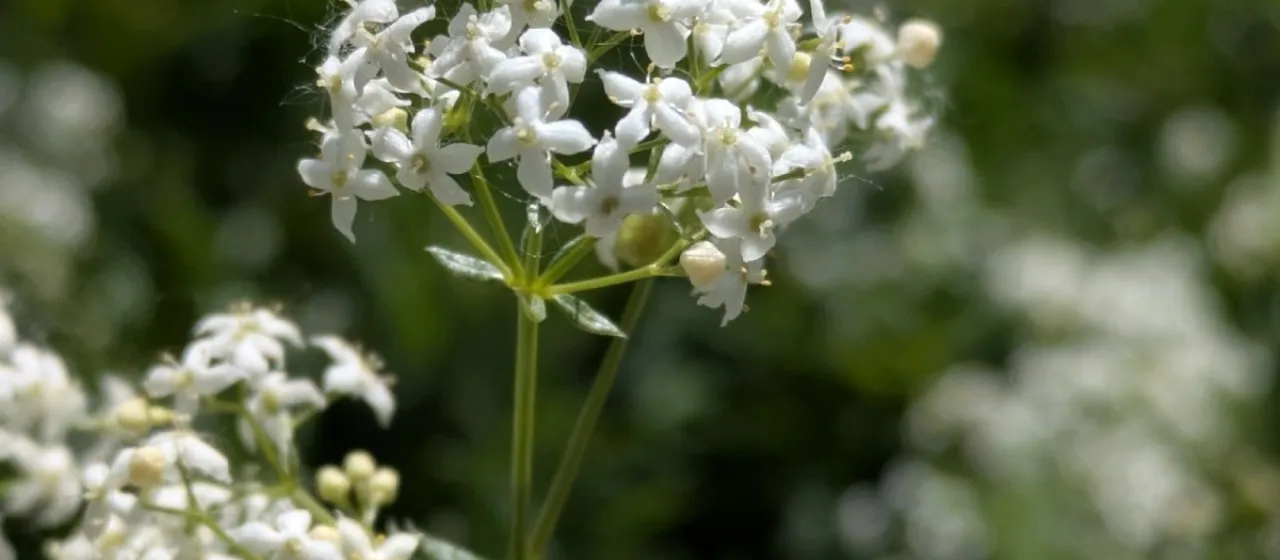
Description
White bedstraw (Latin: Galium album) is a robust perennial herbaceous plant belonging to the Rubiaceae family. While often found in the wild, it holds significant potential in agricultural systems as a forage component and a valuable resource for medicinal and apicultural purposes.
Native to Europe and parts of Asia, this species has naturalized in various regions globally. It thrives in diverse habitats including meadows, forest edges, and managed grasslands. Its wide ecological amplitude makes it a resilient choice for sustainable pasture management in temperate climate zones.
Botanically, Galium album is distinguished by its square-shaped stem and whorled leaves, typically appearing in clusters of six to eight. The plant can reach heights of over one meter. During the blooming season, it produces dense, fragrant inflorescences consisting of numerous tiny, four-petaled white flowers that create a visually striking landscape during summer months.
From an agrotechnical standpoint, white bedstraw is relatively undemanding. It prefers well-drained soils but demonstrates remarkable plasticity regarding soil acidity and moisture levels. To maintain optimal forage quality, it is recommended to manage harvesting before the plant becomes overly lignified. It does not require intensive fertilization, making it an economically viable plant for low-input agricultural production.
The economic value of this crop is multifaceted. It is widely recognized as a premium honey plant, providing bees with abundant nectar. In livestock management, it serves as a nutritious addition to silage or hay. Furthermore, in the pharmaceutical sector, extracts from the plant are studied for their diuretic, anti-inflammatory, and sedative properties, derived from its rich chemical profile including iridoids and flavonoids.
- Excellent nectar production for commercial apiculture.
- Adaptability to various soil conditions and drought resistance.
- Significant biomass production for livestock feed.
- Natural resilience against common agricultural pests.