
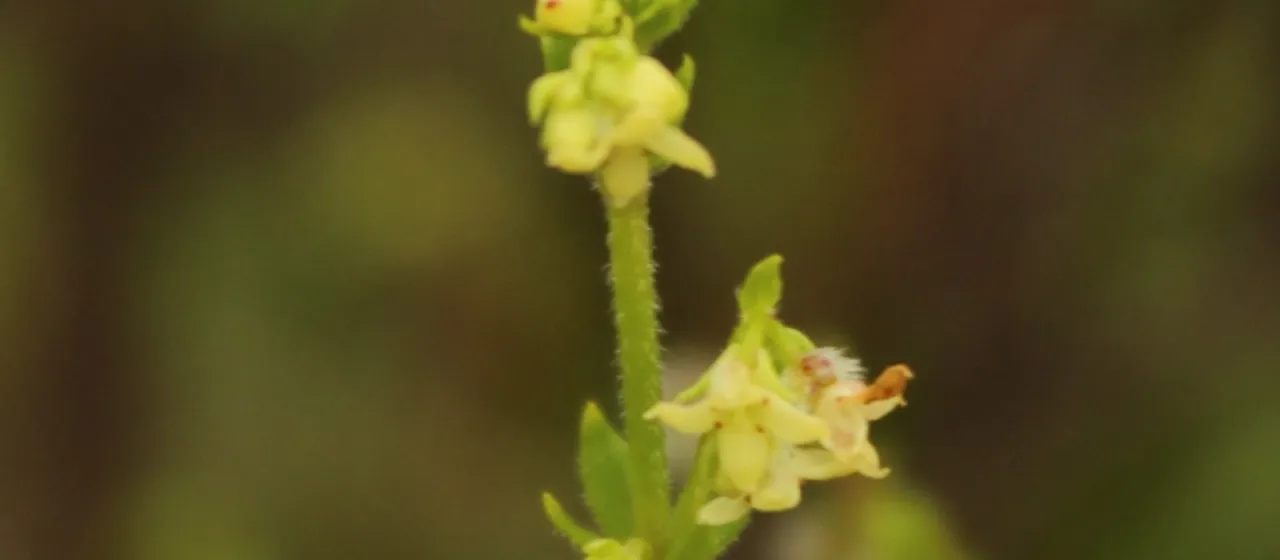
Description
Galium canescens is a perennial herbaceous plant belonging to the Rubiaceae family. Known for its distinct grayish appearance due to fine pubescence on its leaves and stems, this species is well-adapted to specific ecological niches, particularly in mountain habitats where survival depends on efficient moisture retention.
The geographic distribution of Galium canescens is primarily centered in the mountainous regions of the Caucasus and adjacent areas. It thrives in well-drained, stony environments, typically found on dry meadows or open rocky slopes where it has adapted to fluctuating temperatures and intense ultraviolet light exposure.
Botanically, the plant exhibits a robust root system capable of penetrating rocky substrates. Its stem structure and whorled leaf arrangement are characteristic of the genus, yet the density of the indumentum provides a protective layer that differentiates it from other members of the Galium genus in similar territories.
From an agricultural and economic perspective, Galium canescens is viewed as a source of phytochemical interest. Researchers explore its potential for secondary metabolite production, specifically focusing on the anthraquinones contained within its tissues, which have historically been associated with the Rubiaceae family's properties.
Cultivation practices for this species focus on replicating its natural habitat. Proper site selection is critical, with emphasis placed on porous, alkaline, or neutral soils and excellent drainage. Overwatering is the primary risk factor, as the species is highly susceptible to root rot and fungal infections if the growing medium remains consistently saturated.
- Excellent adaptation to arid and stony soils.
- Requires full sun exposure for optimal growth.
- Minimal fertilization needs due to its native habitat conditions.
- High potential for utilization in soil erosion control projects.