
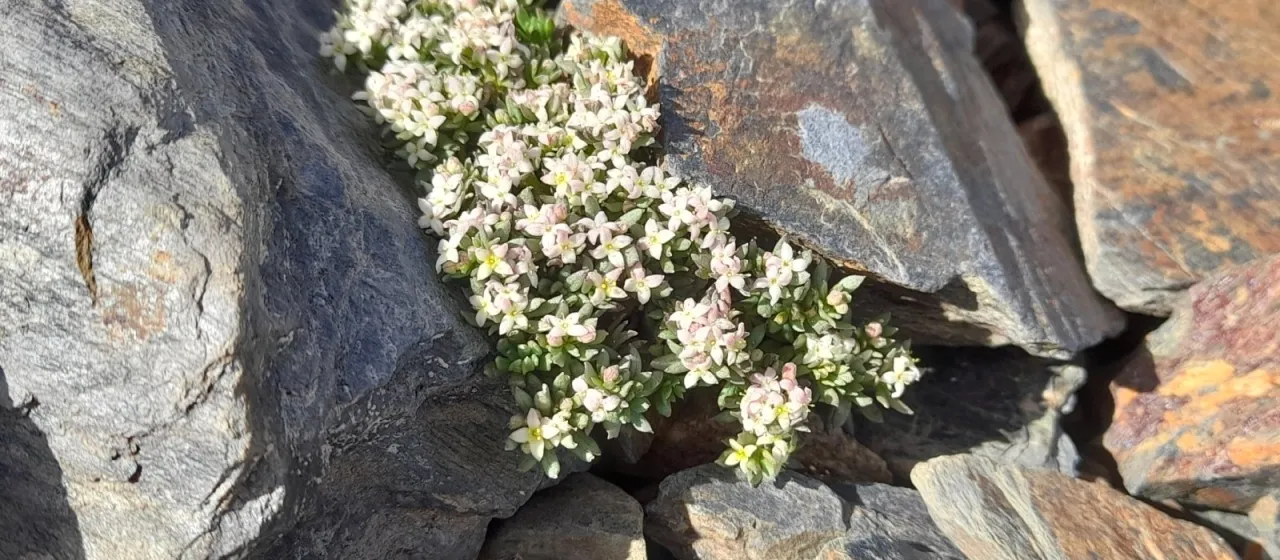
Description
Galium cometerhizon is a perennial herbaceous plant belonging to the Rubiaceae family. This species is recognized for its unique botanical profile, which allows it to thrive in environments that are typically inhospitable to more conventional agricultural crops, making it a subject of specific botanical interest.
The plant originates from specific geographical regions characterized by rugged terrain and rocky slopes. Its natural range is restricted to areas with high ecological specificity, where the plant has evolved to survive under low-nutrient conditions and significant environmental pressures typical of alpine or rocky ecosystems.
Botanically, the species is defined by its characteristic whorled leaves and thin, hardy stems. The root system, as indicated by its Latin nomenclature, displays a comet-like structure, which facilitates deep anchoring and resource uptake in porous, rocky substrates, providing the plant with excellent resilience in its native habitat.
Cultivation requirements for this species focus on excellent soil aeration and high solar exposure. It demands well-drained soil to prevent root rot, as the species is highly sensitive to waterlogged conditions. The implementation of minimal irrigation and neutral-to-alkaline soil profiles is recommended for successful plant development.
The primary utility of the species lies in potential pharmaceutical research due to the chemical diversity inherent in the Rubiaceae family. While not a commercial staple, its management involves monitoring for typical fungal diseases such as powdery mildew, as well as protection from insect pests that can impact growth during the vegetative phase.