
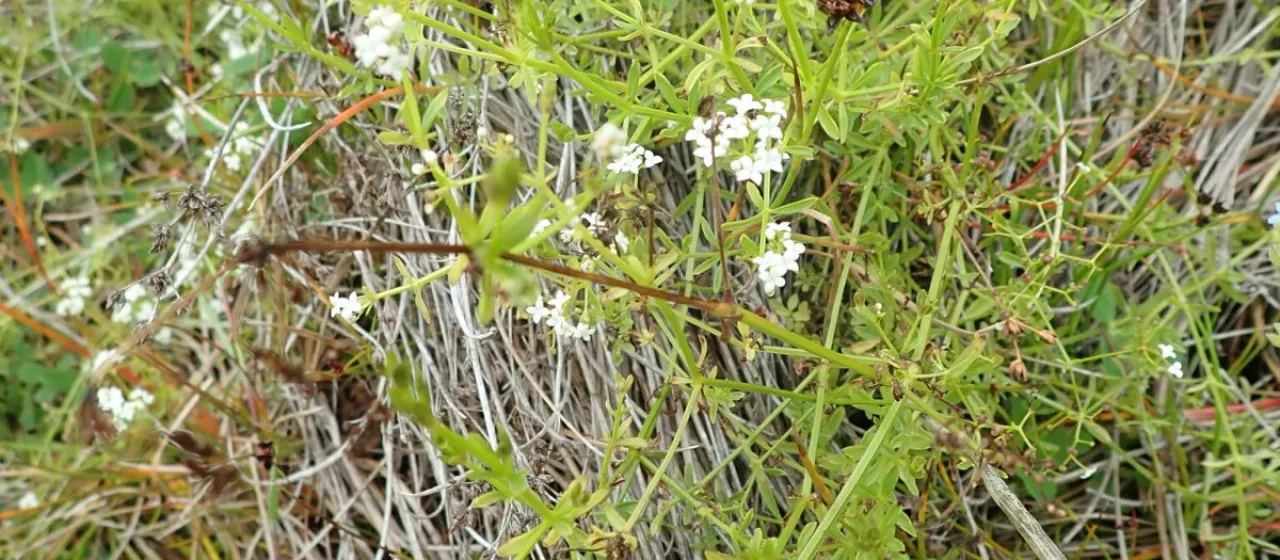
Description
Marsh bedstraw (Galium palustre) is a perennial herbaceous plant belonging to the Rubiaceae family. This species is highly adapted to wetland environments, thriving in habitats where water availability is constant throughout the growing season, making it a key component of hygrophilous plant communities.
The plant originates from across Europe and parts of Asia and North America. It is widely distributed in marshy areas, wet meadows, and alongside aquatic infrastructure. Its ability to tolerate saturated soil makes it a prominent species in lowland landscapes and areas undergoing natural restoration.
Botanically, Marsh bedstraw features a thin, four-angled stem that can grow up to 60 cm in height. Its leaves are typically arranged in whorls of four, displaying a lanceolate shape. The plant produces small, white, star-shaped flowers organized in loose terminal panicles, blooming primarily during the summer months.
Regarding cultivation requirements, the species demands high-moisture soils that are rich in organic matter. While not a conventional field crop, its presence is a reliable indicator of waterlogged conditions. Agricultural management in these areas usually involves maintaining high water tables to preserve the native vegetation structure.
The economic utility of the plant is primarily ecological rather than industrial, as it supports biodiversity in wet pastures. Common diseases include fungal pathogens that thrive in high-humidity conditions, such as rusts. Controlling its population is generally unnecessary unless it interferes with specific intensive irrigation systems.