
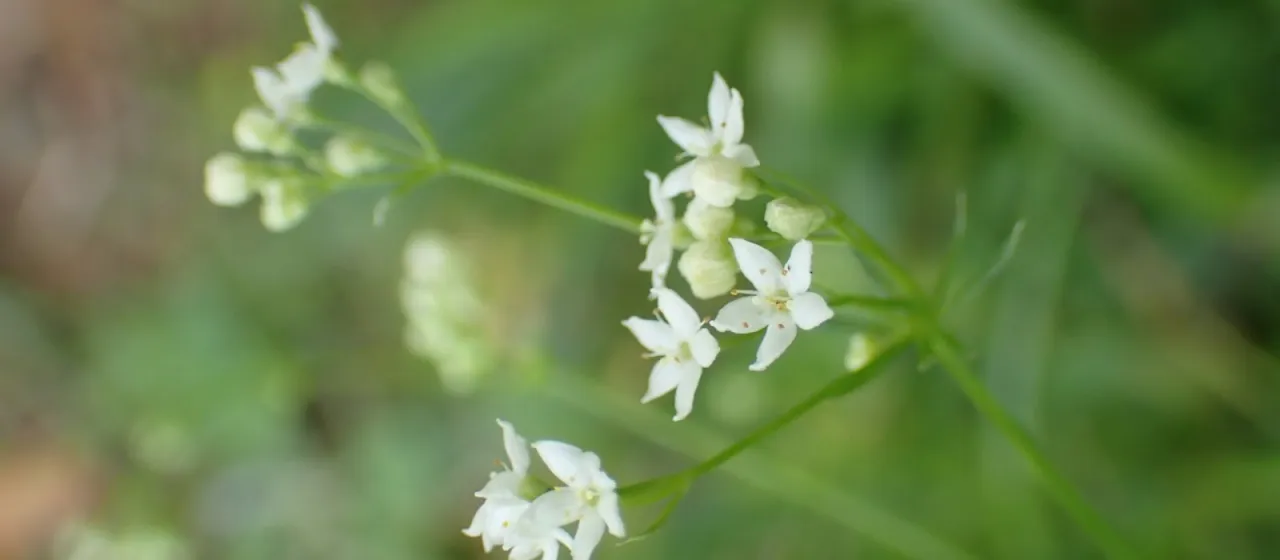
Description
Slender bedstraw (Latin: Galium pumilum) is a herbaceous perennial plant belonging to the Rubiaceae family. This species is recognized for its agricultural value as a ground-covering plant, prized for its ability to stabilize soil and survive in harsh environments where other vegetation often fails.
The plant originates from European mountain regions and temperate grasslands. Its natural habitat typically consists of rocky outcrops, scree slopes, and dry meadows. This environmental history makes it exceptionally well-adapted to well-drained, alkaline soils and high light exposure, traits that are essential for its successful cultivation in various landscape projects.
Botanically, Slender bedstraw is characterized by low-growing, sprawling stems that form dense mats. The leaves are narrow and arranged in whorls around the stem, while the white flowers appear in clusters during the summer months. Its root system is fibrous and effective at binding soil, which is a key trait for erosion control in agricultural management.
In terms of agronomy, the crop requires minimal fertilization but demands excellent drainage. Waterlogging is the primary threat to healthy growth, as it leads to root rot. Propagation is typically achieved through division or seeding in early spring. The crop remains largely pest-free, though monitoring for aphids or fungal pathogens in extremely humid seasons is recommended.
Its primary хозяйственное (economic) uses focus on conservation and landscaping. As an erosion-control agent, it is ideal for steep embankments. Additionally, its aromatic flowers make it an attractive option for biodiversity-friendly gardening. It is a low-maintenance choice for areas where mechanical mowing is difficult or restricted due to terrain complexity.