
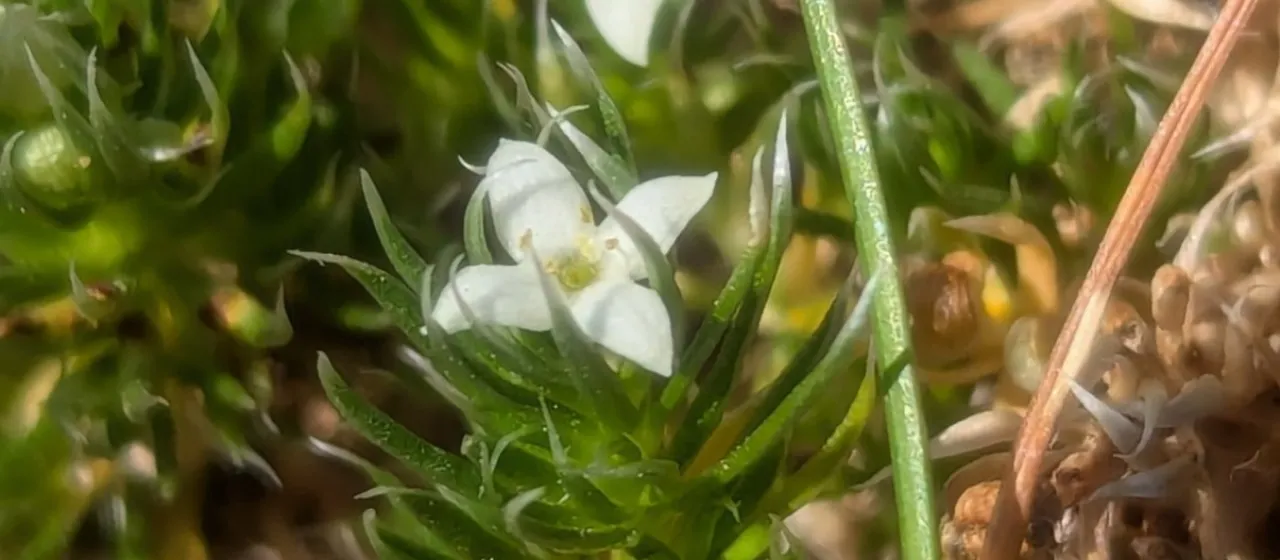
Description
Pyrenean bedstraw (Galium pyrenaicum) is a perennial herbaceous plant belonging to the Rubiaceae family. This species is native to high-altitude environments, characterized by its compact growth form and high tolerance for harsh mountain climates. While not a conventional industrial crop, it is highly regarded in specialized horticulture for its resilience and aesthetic appeal in rocky landscapes.
The origin of the species is centered in the Pyrenees mountain range, where it thrives in rocky crevices and alpine meadows. The natural distribution is limited to specific high-elevation zones. Due to its adaptation to these environments, the plant exhibits a robust nature that is well-suited for cultivation in areas with similar cool-climate conditions and excellent light exposure.
Botanically, Galium pyrenaicum features intricate whorled leaves and delicate, small flowers that typically bloom during the summer months. The root system is relatively shallow but highly efficient at extracting nutrients from rocky substrates. The plant grows slowly, forming dense mats or cushions that contribute to soil stability in its natural habitat.
Regarding cultivation requirements, the plant demands excellent drainage to prevent root rot, as it is sensitive to waterlogged conditions. It prefers sandy or gritty, well-draining soils that mimic its native rocky habitat. A sunny location is essential to maintain the plant's compact architecture and ensure the abundance of flowers during the growing season.
The primary use of Pyrenean bedstraw is in ornamental gardening, particularly in rock gardens, scree beds, and as a groundcover for slopes where high-maintenance plants fail. Its main health issues include susceptibility to fungal root pathogens if drainage is poor, and occasional infestations of aphids or slugs during early spring growth. Proper maintenance involves thinning overcrowded patches and ensuring minimal moisture retention in the soil.