
Description
Roundleaf bedstraw (Galium rotundifolium) is a perennial herbaceous plant belonging to the Rubiaceae family. While primarily recognized as a woodland species, in agricultural and botanical research, it is analyzed for its medicinal potential and its ability to thrive in shaded environments where conventional crops struggle to establish.
The plant originates from European forests and mountainous areas, where it thrives in cool, temperate climates. Its natural habitat includes deciduous and coniferous woodland edges. In an agricultural context, it is cultivated in specialty nurseries or agroforestry systems that prioritize mimicking forest microclimates to ensure consistent growth and high biomass quality.
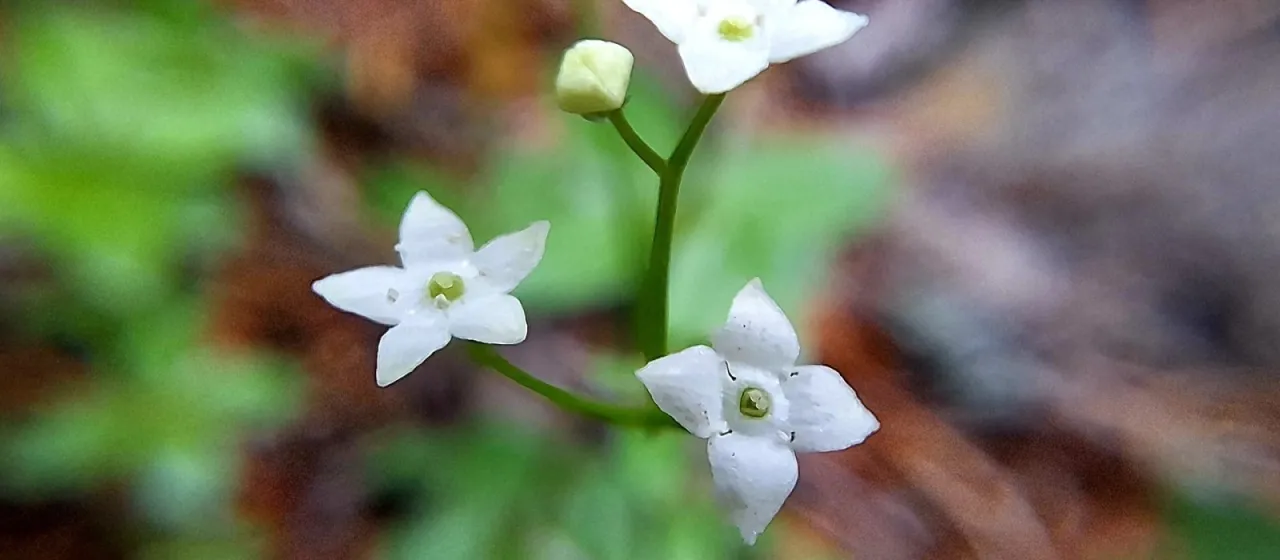
Botanically, Galium rotundifolium is characterized by creeping rhizomes and thin, sprawling stems that carry distinct round or elliptical leaves arranged in whorls. Its flowers are small, white, and organized into loose inflorescences. The plant's structure is optimized for moisture retention and light absorption in low-light environments, making it biologically well-adapted to the understory.
Agrotechnical requirements focus on soil enrichment and light management. The species thrives in humus-rich, well-draining soils with a neutral or slightly acidic pH. Farmers must ensure the site is partially shaded, as direct sunlight can damage the delicate foliage. Regular mulching is essential to maintain the moisture levels required for the expansion of the root system.
The commercial use of roundleaf bedstraw centers on the pharmacological sector, as the plant contains bioactive compounds, including iridoids. It is not typically grown as a mass-market commodity but as a niche medicinal crop. It offers value in diverse cropping systems, particularly in forestry-integrated agriculture, where it acts as a secondary crop utilizing space that would otherwise be unproductive.
- Excellent tolerance to shade conditions.
- Preference for cool and humid microclimates.
- Requirement for organic, humus-rich soil.
- Propagates well through vegetative division.
The primary health threats to the crop include fungal infections triggered by stagnant air or waterlogged soil, as well as pest attacks from slugs or snails. Effective protection involves integrated pest management (IPM) strategies, maintaining proper spacing to ensure airflow, and regular soil pH monitoring to prevent pathogen buildup in the rhizosphere.