
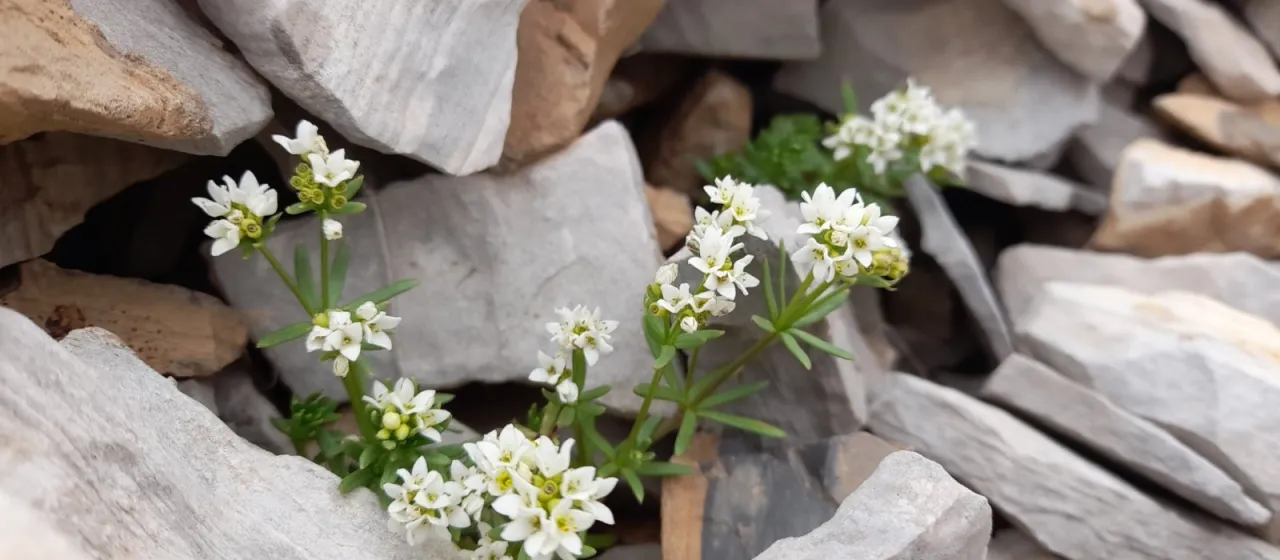
Description
Galium saxosum is a perennial herbaceous plant belonging to the Rubiaceae family. While it is not a primary food crop, it holds a specific niche in ornamental horticulture and environmental stabilization projects due to its unique physiological ability to thrive in challenging geological conditions.
The plant originates from the mountainous regions of Europe. Its natural range is characterized by rocky substrates, scree slopes, and high-altitude terrains. Over centuries of evolution, the species has developed specific mechanisms to cope with nutrient-poor soils, high exposure to solar radiation, and significant temperature fluctuations common in highland environments.
Botanically, Galium saxosum presents as a low-growing, mat-forming plant. Its stems are slender and frequently prostrate, with narrow leaves arranged in whorls. During the flowering stage, the plant produces dense clusters of small white to creamy flowers, which contribute to its reputation as a preferred choice for alpine garden aesthetics.
Cultivation requires strict attention to soil composition. The plant demands excellent drainage, favoring sandy or rocky loam substrates. It is highly resistant to drought once established, but it is extremely susceptible to root rot caused by stagnant water. It thrives best in neutral to slightly acidic soil conditions and requires minimal supplemental fertilization to maintain its compact growth form.
Regarding its utility, Galium saxosum is primarily employed for erosion control on slopes and as a decorative ground cover in landscape design. The plant is notably resilient against common agricultural pests. Diseases, such as fungal pathogens, are generally avoided by ensuring proper air circulation and maintaining a dry surface layer during the growing season.
- Excellent cold hardiness.
- Drought tolerance suitable for xeriscaping.
- Low maintenance requirements.
- Effective erosion control on steep rocky surfaces.