
Description
Rough corn bedstraw (Galium tricornutum) is an annual herbaceous plant belonging to the Rubiaceae family. Although it is not a cultivated crop, it is a significant weed found in agricultural fields worldwide. The plant is well-known for its climbing habit, utilizing its rough, hooked stems to support itself on grain crops, which often leads to lodging and harvest difficulties in heavily infested fields.
The species originated in the Mediterranean region but has since naturalized across temperate zones in Europe, North Africa, and Western Asia. It thrives in various soil types but shows a clear preference for fertile, alkaline, and carbonate-rich soils. In many agricultural systems, Galium tricornutum is recognized as a persistent weed in winter cereals like wheat and barley, where it competes aggressively for space and essential nutrients.
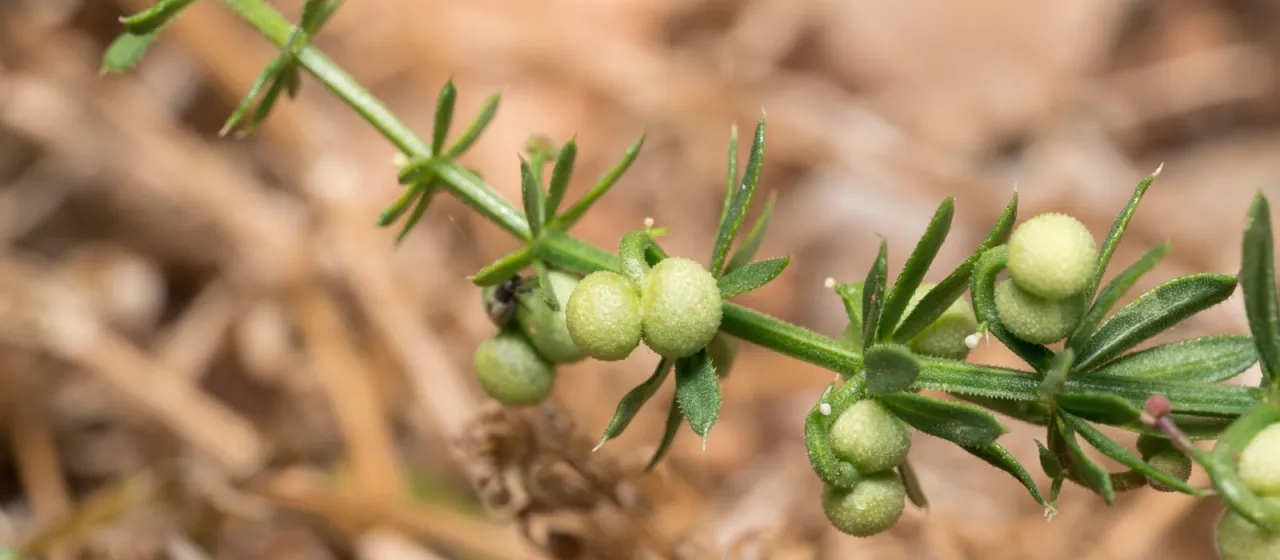
Botanically, the plant features a branched stem equipped with downward-pointing prickles, which allow it to scale neighboring plants. Its leaves are arranged in whorls, and it produces small white flowers in axillary clusters. A distinguishing feature is its fruit: small, globular nutlets that are often covered in tiny tubercles. These seeds are easily harvested alongside crops, facilitating the spread of the weed to new areas.
Agronomic management of rough corn bedstraw requires a multifaceted approach. Because it can germinate over a prolonged period, single herbicide applications are often insufficient. Effective control strategies involve a combination of rigorous crop rotation, the use of high-quality, certified seed to prevent introduction, and the timely application of pre-emergence or post-emergence herbicides specifically targeting broad-leaved weeds within cereal fields.
From an agricultural standpoint, there is no direct economic use for this plant. Its presence serves as a negative indicator of field management efficiency. In addition to direct competition, it can harbor various pests and diseases that may affect primary crops. Farmers must remain vigilant, particularly during the early growth stages of cereals, as early infestation is much easier to manage than mature, established populations.