
Description
Three-petal bedstraw (Latin: Galium trifidum) is an herbaceous plant belonging to the Rubiaceae family. While traditionally classified as a wild herb, it is increasingly studied in modern agronomy for its potential in pharmaceutical industries and specialized herbal crop production, given its unique chemical composition.
The plant originates from the temperate regions of the Northern Hemisphere, thriving primarily in moist environments such as wetlands, damp meadows, and riparian zones. In an agricultural setting, the species requires specific site selection that mimics these natural conditions, ensuring a consistent moisture supply throughout the growing season to reach optimal biomass production.
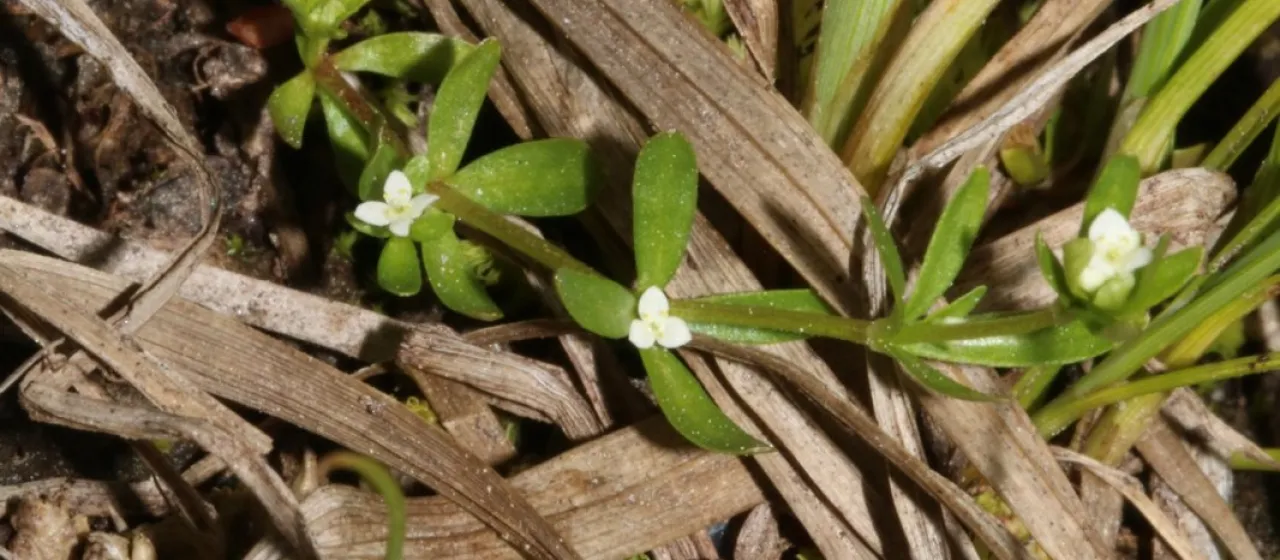
Botanically, Galium trifidum is characterized by its slender, four-angled stems that are often weak and sprawling. The foliage consists of narrow leaves arranged in whorls of four to six. The flowers are remarkably small, typically white, and bloom in delicate clusters. This morphological structure makes the crop relatively sensitive to wind and mechanical damage during the harvesting phase.
Agronomic requirements are focused on high organic matter soils with a balanced pH. The plant performs best in cool, humid climates, making it a suitable candidate for specific regional cultivation. Key management practices include meticulous weed control during the seedling establishment stage and the installation of irrigation systems if the natural rainfall pattern is insufficient to maintain soil field capacity.
The economic utility of the crop lies in its secondary metabolites used for health-related applications. Crop health is primarily challenged by fungal pathogens like mildew, which thrive in stagnant, humid conditions. Integrated pest management (IPM) is essential for controlling common pests such as aphids and leaf-chewing insects, prioritizing sustainable biological controls to ensure the quality of the raw material.