
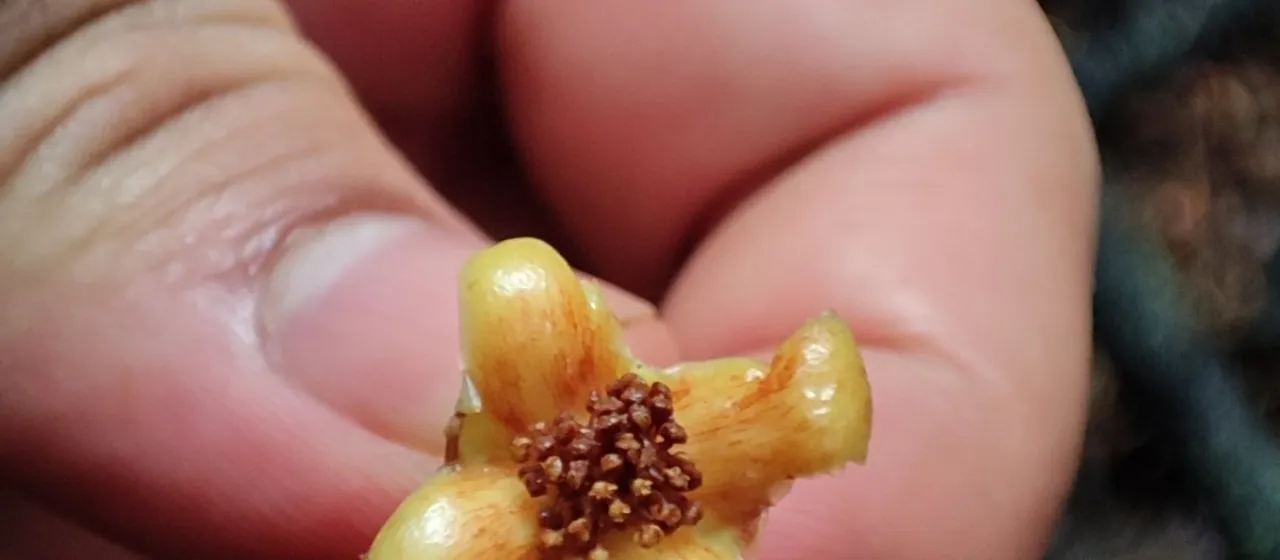
Description
Garcinia cowa is a tropical evergreen tree belonging to the Clusiaceae family. It typically reaches heights of 10 to 12 meters and features a dense canopy with dark green, leathery, lanceolate leaves. In agricultural settings, it is valued as an important fruit-bearing species native to Southeast Asia, offering both nutritional and medicinal potential.
The native range of this species extends across tropical regions of India, Myanmar, Thailand, and Malaysia. It thrives in dense evergreen forests and on slopes, preferring areas with high humidity and significant annual rainfall. Because of its specific ecological niche, Garcinia cowa requires a stable tropical climate without the risk of frost to produce viable fruit crops.
Botanically, the tree is characterized by its smooth bark and the presence of a yellowish latex that exudes from wounds in the branches or trunk. The plant is dioecious, meaning that both male and female trees must be present for successful pollination and fruit set. Its fruits are globose to depressed-globose, turning a yellow-orange hue at maturity, with an acidic but pleasant pulp.
Agronomic management of Garcinia cowa requires well-drained, nutrient-rich soils with a high organic content. The crop is sensitive to waterlogging, so site selection with proper elevation and drainage is critical. Regular fertilization, focusing on nitrogen during the vegetative stage and potassium during fruit development, is recommended to maximize yields in commercial orchards.
The economic utility of Garcinia cowa is diverse, supporting local livelihoods in its native regions through several key applications:
- Culinary use: The fruits are used to prepare traditional souring agents for curries and regional dishes.
- Food processing: Transformation of fruit into juices, preserves, and fermented products.
- Traditional medicine: Utilization of leaves, bark, and dried fruit for digestive and anti-inflammatory remedies.
Common pests and diseases include root rot caused by poor soil drainage and various scale insects that feed on the sap of young shoots. Effective management involves maintaining adequate spacing between trees to ensure proper airflow and utilizing integrated pest management strategies to keep foliage healthy throughout the active growing season.