
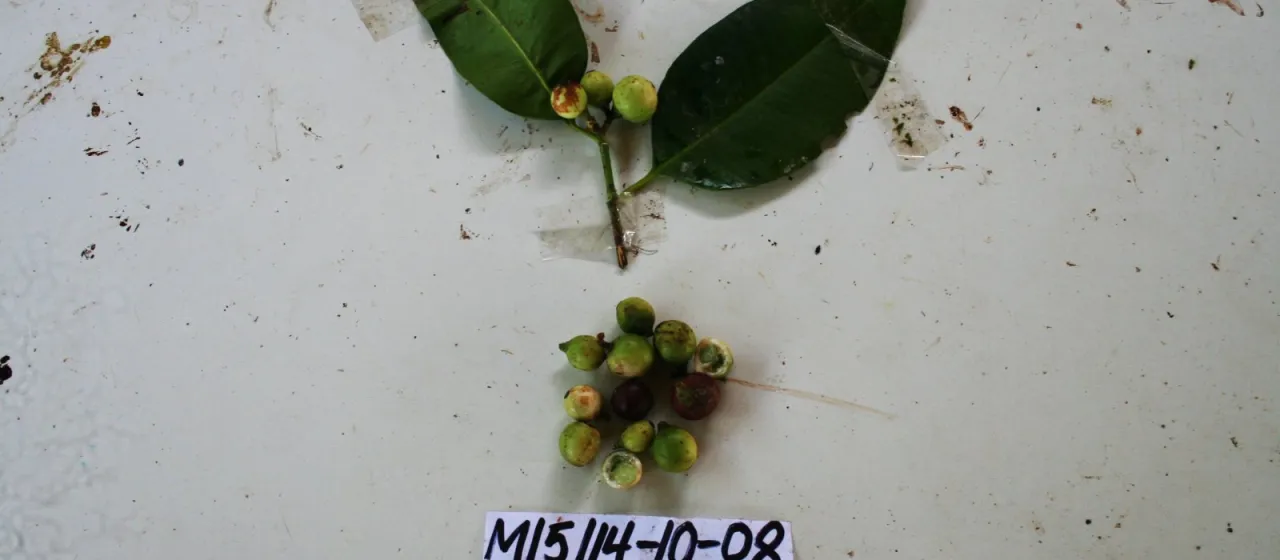
Description
Garcinia cymosa is an evergreen tree species belonging to the Clusiaceae family. As a tropical crop, it is notable for its botanical adaptability within dense, humid forest environments. While not as commercially widespread as some of its relatives like Garcinia mangostana, it remains a significant species in tropical ecology and local agricultural practices.
The plant originates from the tropical regions of Southeast Asia. Its native range is characterized by high rainfall and consistently warm temperatures, allowing the tree to maintain vegetative activity throughout the year. It thrives in understory or edge-of-forest habitats where light is filtered and humidity levels remain high, reflecting its evolutionary strategy.
Botanically, it is defined by its coriaceous leaves and cymose inflorescences, which give the species its scientific name. The fruit is a typical berry of the genus, containing nutritious seeds and pulp. The structure of the tree allows it to withstand heavy rainfall while maintaining the structural integrity of its canopy, which is essential for survival in its natural climate.
For cultivation, Garcinia cymosa requires well-drained but moisture-retentive soils with high organic content. In agricultural settings, it is crucial to provide a controlled irrigation system to prevent root hypoxia while ensuring the plant does not experience water stress. It is sensitive to extreme soil pH shifts and requires steady nutrient availability for optimal yields.
The primary use of this crop is local fruit consumption and potential application in traditional phytomedicine. Agronomic management involves monitoring for common tropical pests such as scale insects and mealybugs, as well as fungal pathogens like leaf spot diseases. Preventive practices, including proper canopy ventilation and regular sanitation, are essential for maintaining a healthy plantation.