
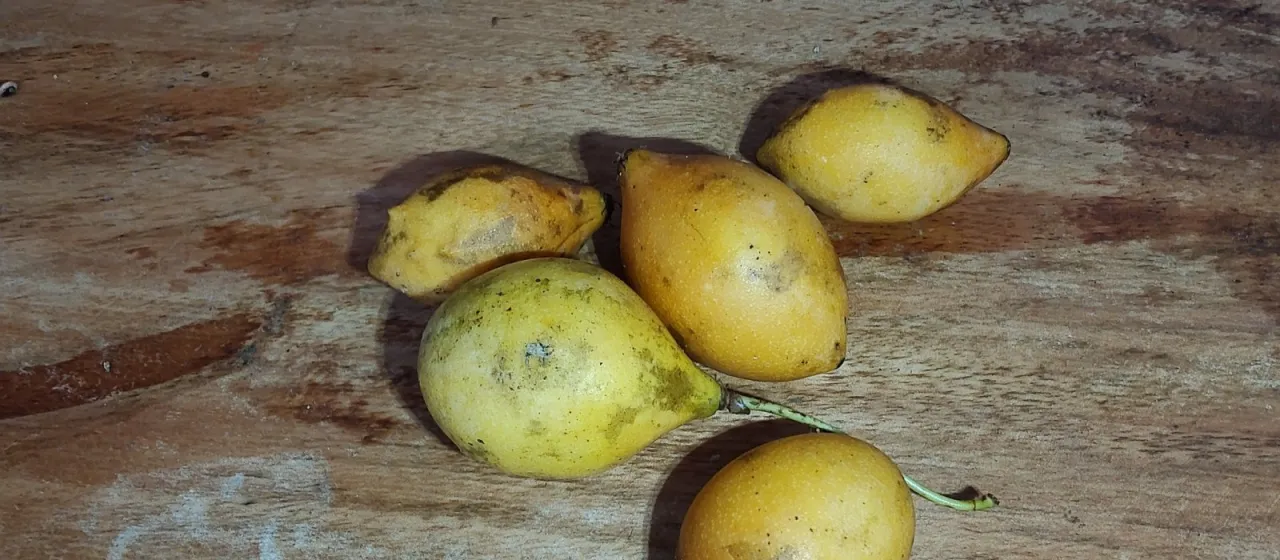
Description
Garcinia gardneriana is an evergreen fruit-bearing tree that belongs to the Clusiaceae family. Known in its native regions as a type of "bacuri", this plant is highly regarded for its edible fruits which possess a unique, pleasant flavor profile. As a tropical species, it thrives in humid environments and contributes significantly to local biodiversity.
The native range of this species covers the tropical rainforests of South America, specifically parts of the Amazon basin. It naturally grows as an understory tree, which dictates its preference for filtered sunlight and protection from harsh, direct exposure. It is rarely found in large-scale commercial plantations but is a staple in various traditional agroforestry systems.
Botanically, the tree reaches a height of up to 12 meters, characterized by its dense, glossy, dark green foliage. The fruits are typically spherical, containing a pulpy, succulent flesh that surrounds the seeds. Flowering usually occurs during the wetter seasons, and the development of fruit requires a steady supply of nutrients and moisture to ensure quality yield.
To cultivate Garcinia gardneriana successfully, growers must mimic its natural environment. It requires high ambient humidity and temperatures that remain above 15-20°C throughout the year. The soil should be fertile, well-draining, and rich in organic matter. Regular irrigation is crucial, especially during the fruit-set phase, to prevent premature fruit drop.
The culinary applications for the fruit are diverse, ranging from fresh consumption to the production of exotic fruit juices, jellies, and desserts. Beyond its fruit, the tree is appreciated for its aesthetic value in tropical landscapes. Regarding plant health, growers should monitor for common tropical pests such as mealybugs and aphids, while ensuring proper drainage to prevent root rot diseases.