
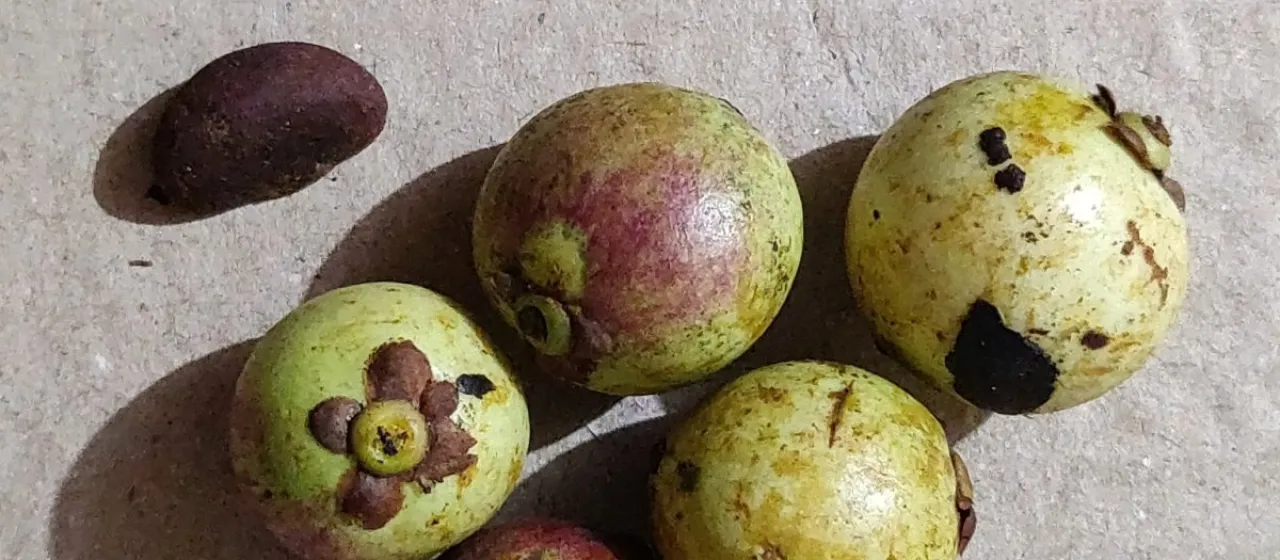
Description
Garcinia morella is a tropical evergreen tree belonging to the Clusiaceae family. Known primarily as a source of the pigment gamboge, this species is highly valued in its native regions for both industrial and medicinal purposes. The tree is characterized by its slow growth rate and high adaptability to deep, shaded forest environments.
The plant originates from the tropical rainforests of South and Southeast Asia, with a primary distribution in India, Sri Lanka, and parts of Thailand. It thrives in high-humidity climates where the temperature remains consistent throughout the year. It does not tolerate cold drafts or arid conditions, which limits its commercial cultivation to specific tropical geographic zones.
Botanically, the tree features dense, dark green foliage with elliptical leaves and yellow-to-orange berries. The fruit is fleshy and contains several seeds. The inner bark of the tree yields a thick, yellow latex, which is the primary source of the resinous substance known as gamboge. The tree typically reaches maturity and starts producing fruit after several years of growth.
Agricultural success with Garcinia morella requires fertile, well-draining soil with a slightly acidic to neutral pH. Young plants require partial shading to protect them from excessive direct sunlight during their establishment phase. Irrigation must be managed carefully; while the plant loves moisture, it is highly susceptible to root rot if water stagnation occurs in the root zone.
Key areas of economic and хозяйственного use include:
- Extraction of gamboge resin for use as a traditional pigment and varnish.
- Traditional medicinal applications of the fruit and bark extracts.
- Use of fruit flesh in local culinary traditions for preservation.
- Utilization of the timber for small-scale carpentry and tools.
Common pests and diseases include various leaf-spotting fungi and scale insects that can weaken the tree's vitality. Agronomic management involves consistent monitoring for fungal infections and ensuring good air circulation within the tree canopy. Integrated pest management (IPM) techniques, focusing on organic alternatives, are preferred to maintain the health of the trees and the quality of the harvested latex.