
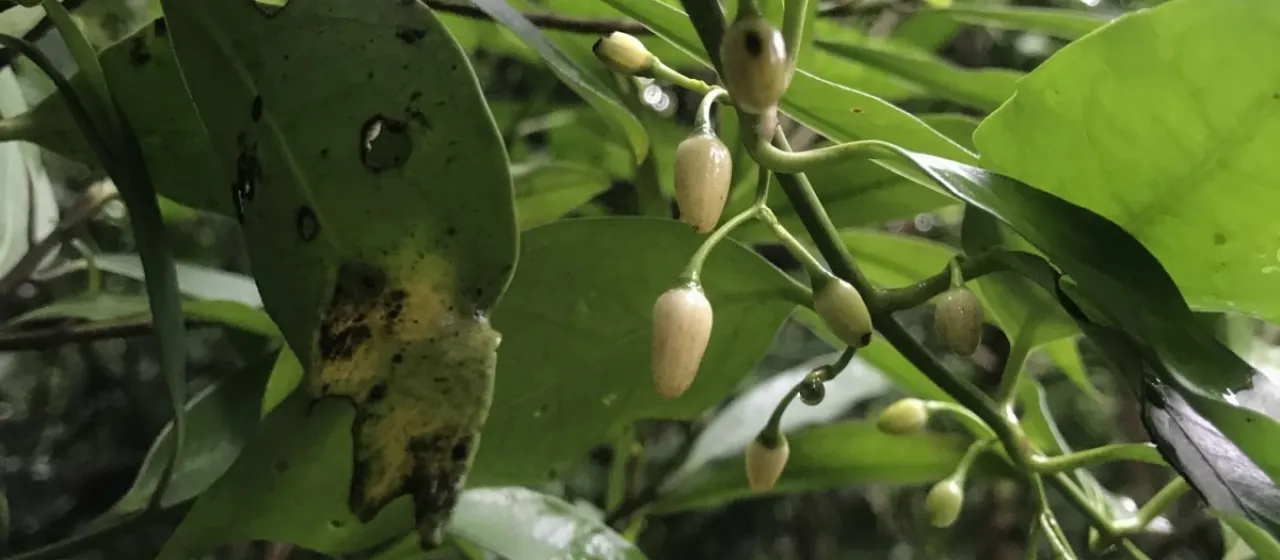
Description
Gardneria nutans is a woody, climbing shrub belonging to the Loganiaceae family. Known for its distinct drooping inflorescences, this plant is primarily valued for its botanical uniqueness and its niche role in specialized horticultural collections that focus on subtropical climbing species.
The plant originates from the mountainous and forest regions of Southeast Asia, including parts of China and the Himalayas. Its natural habitat consists of moist, shaded forest understories where it functions as a climber, utilizing surrounding vegetation to reach optimal levels of diffused sunlight. Successful cultivation in non-native regions requires a greenhouse or conservatory environment.
Botanically, Gardneria nutans is characterized by its glossy, opposite leaves and slender, flexible stems that harden over time. The flowers are typically small, arranged in characteristic hanging clusters. The fruit development follows successful pollination, often resulting in small, decorative berries that add to the aesthetic value of the plant.
Regarding climate and soil, the plant requires high humidity, moderate temperatures (ranging from 15°C to 25°C), and well-draining, nutrient-rich soil. It is highly sensitive to waterlogging, which can cause root rot, therefore precise irrigation management is vital. Providing sufficient vertical support is essential to maintain the structural integrity and health of the vine as it matures.
Economically and scientifically, the species is explored for its phytochemical properties. Like many members of the Loganiaceae family, it contains diverse alkaloids, making it a subject of pharmacological interest. In agricultural and ornamental settings, it serves as an exotic specimen for indoor vertical landscaping, demanding specific care to flourish in artificial environments.
- Regular misting to maintain high relative humidity.
- Installation of sturdy climbing structures or trellises.
- Use of organic-based potting mixes with excellent drainage.
- Monitoring for common greenhouse pests such as aphids and spider mites.