
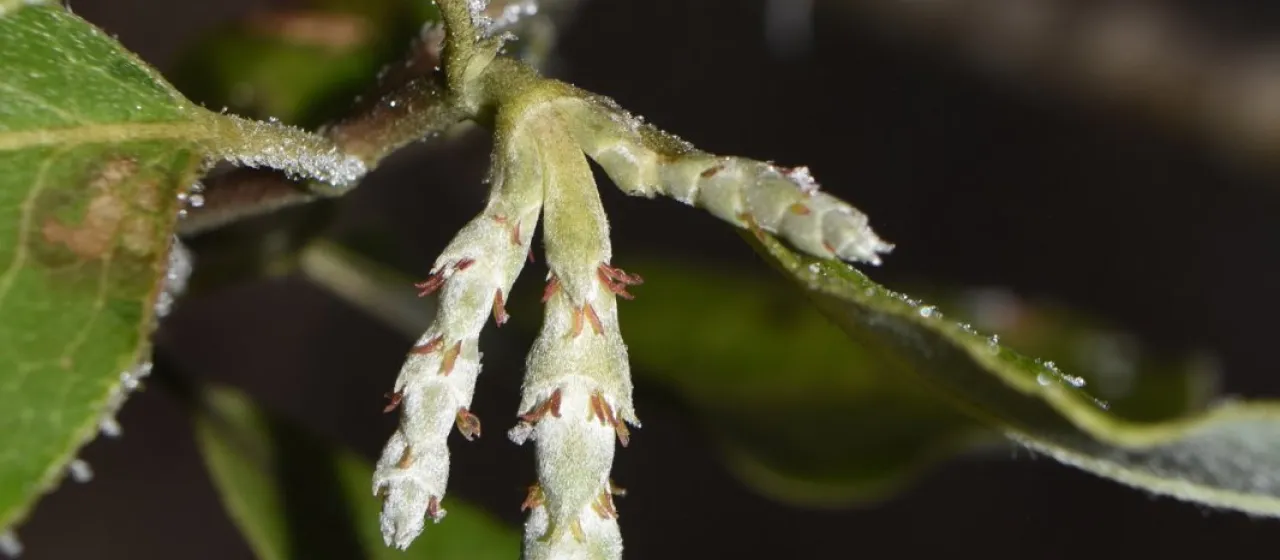
Description
Fremont's silktassel (Garrya fremontii) is an evergreen shrub belonging to the Garryaceae family. Known for its distinctively elegant, drooping catkins that emerge in late winter and early spring, this shrub is a staple in native plant gardens of the western United States. It grows as a dense, woody shrub, often reaching several meters in height.
The native range of this species extends across the western regions of North America, particularly in California and Oregon. It thrives in dry, rocky soils on mountain slopes and open woodlands. This distribution highlights the plant's natural preference for climates characterized by mild, wet winters and long, dry, warm summers.
Botanically, the plant is characterized by leathery, dark green leaves that are slightly fuzzy on the underside. The inflorescences, or catkins, are the primary ornamental feature. While both male and female plants exist, the male catkins are typically more prominent and decorative. The fruit, developing later, is a small, hard berry often consumed by local avian species.
Cultivation requirements for this species center on excellent drainage. It is highly intolerant of waterlogged soil, which can lead to rapid root decay. Ideally, it should be planted in a location with full sun to light shade. Once established, the plant is remarkably drought-tolerant and requires very little maintenance, including minimal fertilization.
- Highly drought-tolerant once established.
- Thrives in lean, well-draining rocky soils.
- Excellent choice for low-maintenance xeriscaping.
- Provides habitat and food for local wildlife.
- Resistant to most common garden pests.
In landscaping, Fremont's silktassel is used to add structural interest to garden borders and as a background plant in native hedges. Disease-wise, the shrub is generally healthy, though it may be susceptible to root pathogens if planted in stagnant moisture. Proper site selection remains the most critical factor for ensuring the plant's long-term vitality.