
Description
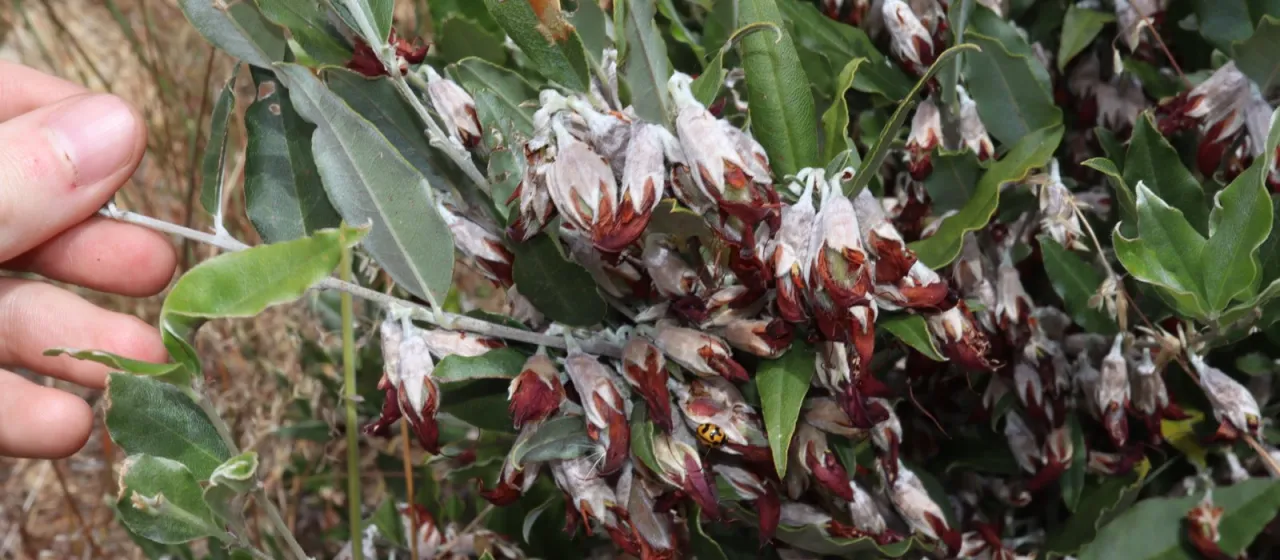
Gastrolobium celsianum is a perennial evergreen shrub belonging to the Fabaceae family. Native to the diverse landscapes of Western Australia, it represents a group of plants uniquely adapted to survive in harsh, Mediterranean-like environments with distinct wet and dry seasons.
The distribution of this species is confined to specific regions of Australia. In its natural habitat, it thrives in well-drained soils and open, sunny locations, where its physiological adaptations allow it to flourish despite periodic water scarcity and seasonal thermal fluctuations.
Botanically, Gastrolobium celsianum is characterized by its stiff, often leathery leaves arranged in a regular pattern. The inflorescences consist of typical pea-shaped flowers, which provide a significant aesthetic value. The plant's root system is adapted for efficient mineral uptake, reflecting its evolutionary strategy within nutrient-deficient soils.
Agricultural and horticultural management of this crop requires strict attention to drainage. The plants perform best in gravelly or sandy loam soils that prevent waterlogging. Pruning should be carried out after the flowering period to maintain a compact shape and encourage the development of new, healthy shoots in the following season.
Its primary use is in ornamental horticulture, where it is valued for its unique foliage and distinct flowering cycle. It is often included in xeriscaping projects or used as an accent plant in Mediterranean-style gardens, providing a touch of authentic Australian wilderness to managed landscapes.
Common health issues and pests include:
- Root rot pathogens triggered by overly damp soil conditions.
- Powdery mildew that affects leaves during humid, stagnant periods.
- Various sap-sucking insects like aphids, which are common in sheltered environments.