
Description
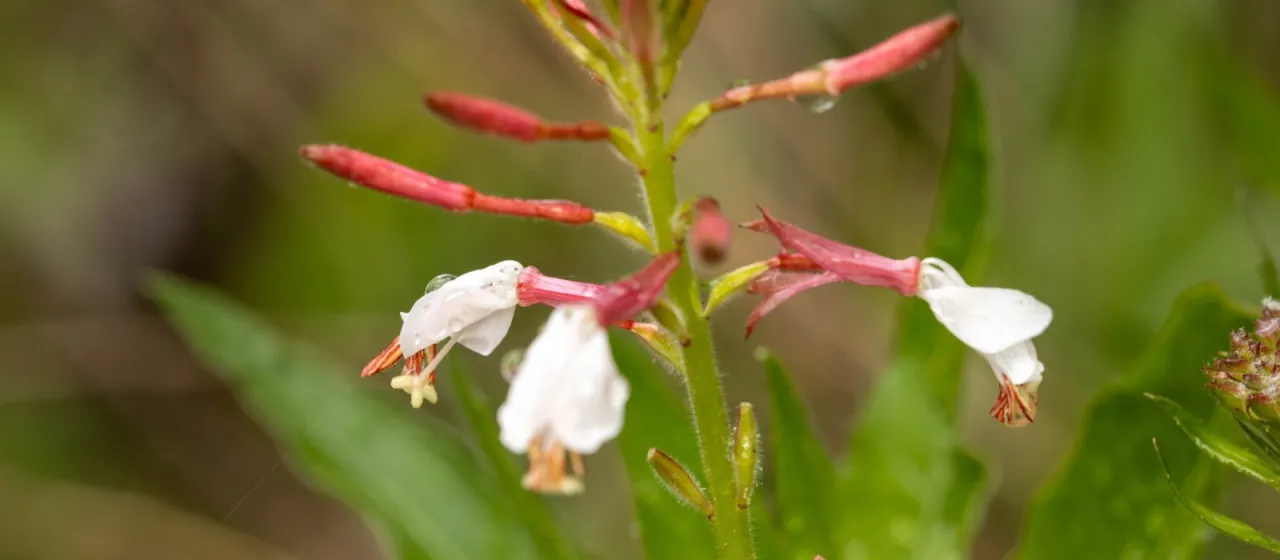
Biennial gaura (Gaura biennis) is a herbaceous plant belonging to the Onagraceae family. Often overlooked in favor of its perennial relatives, this species stands out for its structural beauty and ability to thrive in harsh environments, making it a valuable addition to naturalistic landscapes and wildflower gardens.
Originating from North America, the plant is native to prairies, open meadows, and roadside habitats. This geographic origin indicates its evolutionary adaptation to varying soil types and climates, ranging from temperate zones to regions with periodic dry spells, which defines its robust nature in garden settings.
The plant exhibits a distinct life cycle, growing as a basal rosette in its first year and bolting to produce tall, multi-branched floral stems in its second year. The inflorescences consist of numerous small white to pink-tinged flowers that open in sequence along the spikes. This blooming pattern provides a long-lasting display that adds vertical interest to any planting design.
Cultivation requirements are relatively straightforward. The species prefers full sun and well-draining, slightly nutrient-poor soil. It is exceptionally drought-tolerant once established, thanks to its deep taproot. Key agricultural practices include minimal fertilization, as excessive nutrients can result in floppy stems, and ensuring adequate drainage to prevent root issues during dormant periods.
The primary use of biennial gaura is in decorative and ecological restoration contexts. It is an excellent choice for attracting pollinators to garden ecosystems. Common pests include aphids during heatwaves, and diseases like fungal root rot can occur if soil drainage is poor. Proper air circulation and site selection are the best preventative measures for maintaining healthy plant stands.