
Description
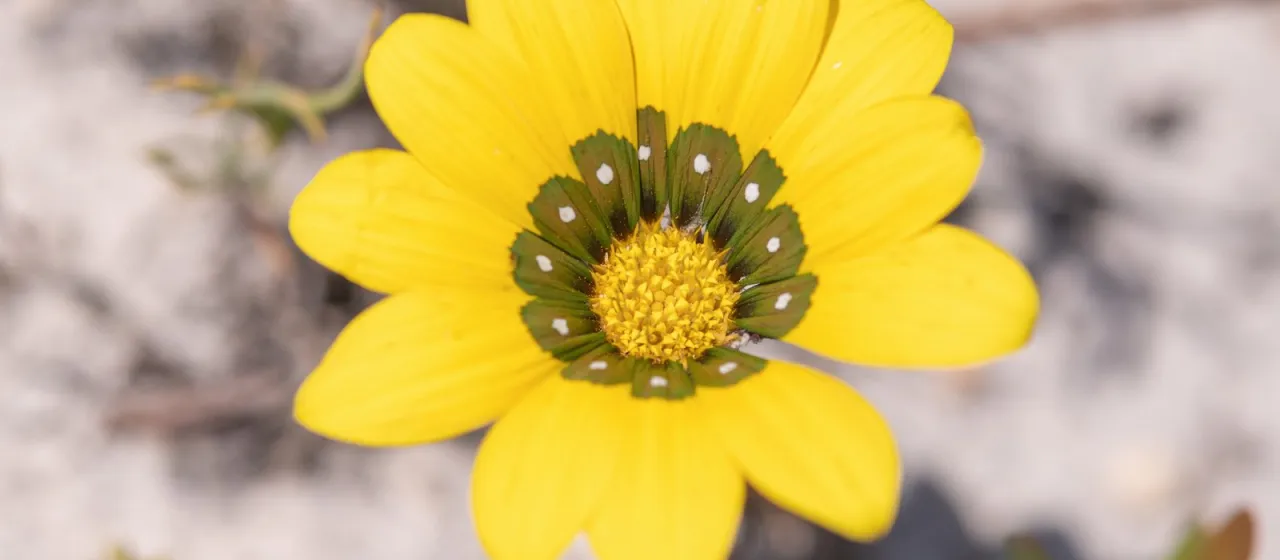
Gazania pectinata is a flowering perennial species belonging to the Asteraceae family. Known for its striking, sun-loving nature, this plant is a popular choice for gardeners seeking drought-tolerant varieties that provide intense color during the peak summer months. It is widely recognized for its ability to thrive in harsh, sunny conditions where other flowers might struggle.
Native to South Africa, the plant has evolved to survive in arid, sandy, and rocky environments. This geographic origin determines its specific cultural requirements. While it is a perennial in its native range, in many parts of the world, it is treated as an annual because it is highly sensitive to frost and freezing temperatures, which cause significant damage to its root system.
Botanically, Gazania pectinata is characterized by its basal rosette of finely dissected, serrated leaves, which often feature a silver-gray felted underside. The inflorescences are large, daisy-like flower heads that exhibit a wide range of warm hues, including yellow, bronze, and deep orange, often accented by a dark, contrasting band around the center of the petals.
Successful cultivation relies on mimicking its natural habitat. The plant requires full sun to ensure the blooms open fully, as they remain closed on overcast days. Soil must be well-drained, sandy, or loamy; heavy, clay-based soils that retain moisture are detrimental to its health. Over-watering is the most common cause of failure in domestic gardening environments.
- Start seeds indoors 8-10 weeks before the last frost.
- Ensure excellent drainage by incorporating gravel or sand into the soil.
- Remove spent flower heads to prolong the blooming season significantly.
- Apply fertilizer sparingly, as too much nitrogen leads to excessive foliage growth.
The primary use of Gazania pectinata is in landscape gardening, specifically for rock gardens, sunny borders, and decorative container planting. In terms of health, the plant is generally robust. However, growers should remain vigilant regarding grey mold during periods of high humidity and common garden pests like aphids and spider mites, which can be managed with targeted treatments.