
Description
Geitonoplesium cymosum, commonly known as the scrambling lily, is a perennial evergreen climber belonging to the Asphodelaceae family. It is a robust plant that naturally climbs through other vegetation, utilizing its flexible, woody-based stems to reach sunlight in dense forest habitats.
The plant is native to eastern Australia, New Guinea, and the Pacific Islands. It thrives in rainforest margins, wet sclerophyll forests, and coastal scrub. In agricultural settings, it is best suited to regions with stable, mild temperatures, as it is not highly tolerant to hard frosts or prolonged cold spells that can damage the root system.
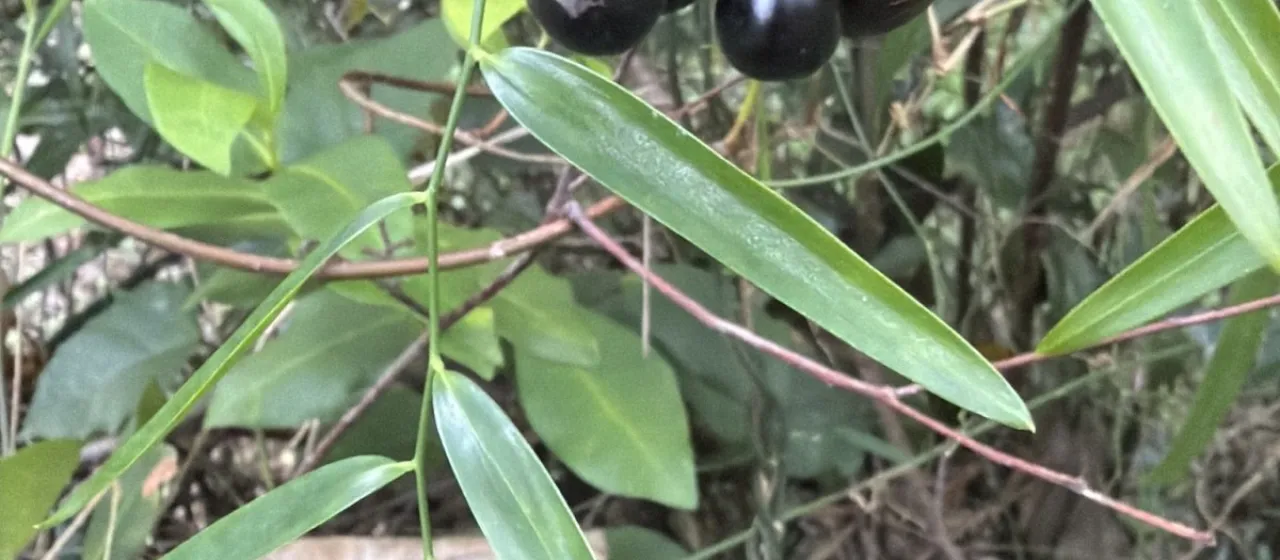
Botanically, Geitonoplesium cymosum is characterized by narrow, alternate leaves and distinctive terminal clusters of white to pale green flowers. These blossoms eventually develop into small, fleshy, dark-colored berries. The foliage is typically glossy, providing a dense cover that is highly appreciated in botanical garden collections and vertical greening projects.
Cultivation requires well-draining, humus-rich soil with a slightly acidic to neutral pH. Providing a stable trellis or support structure is essential, as the plant cannot maintain its structure without climbing aids. While it prefers partial shade, it can adapt to various light conditions if soil moisture is managed correctly throughout the growing cycle.
Economically, the plant is valued for its versatility. The young shoots are traditionally harvested and prepared similarly to asparagus, offering a unique flavor profile. Beyond its nutritional use, it is an excellent candidate for sustainable landscaping due to its resilience against common garden pests and its relatively low requirement for chemical fertilizers or pesticides.
- Strong resistance to many pathogens
- Requires consistent watering during dry spells
- Best propagated via seeds or rhizome division
- Excellent for vertical gardening applications