
Description
Genipa americana, commonly known as jagua, is a perennial tropical tree belonging to the Rubiaceae family. This species is highly regarded in its native regions for its multipurpose utility, spanning from food production to the manufacturing of natural dyes and timber.
The plant originates from the tropical regions of Central and South America, as well as the Caribbean. It thrives in humid environments and is particularly notable for its resilience, as it can flourish in swampy conditions or areas prone to frequent flooding, where many other fruit-bearing species would fail.
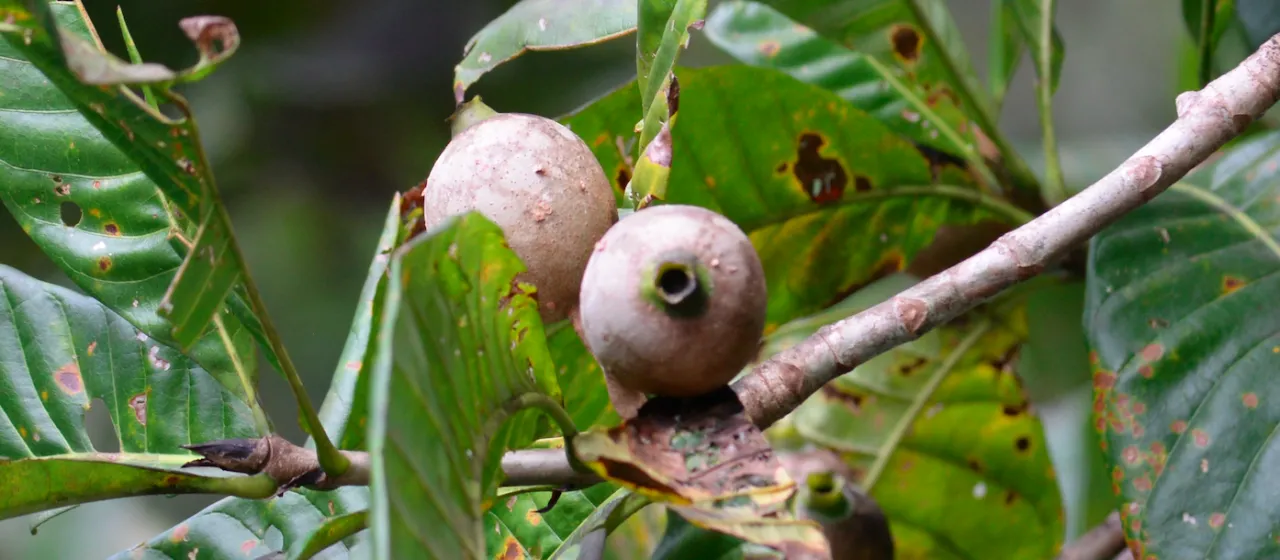
Botanically, the tree reaches a significant height, often growing up to 30 meters. It features large, glossy, opposite leaves and white to yellowish fragrant flowers. The fruit is a brownish, globose berry containing a pulp that, while edible when ripe, is the primary source of a potent, skin-staining pigment when unripe.
Cultivation of Genipa americana requires a tropical climate with high humidity and consistent warmth. While it is adaptable to different soil types, it performs best in nutrient-rich, well-drained soils, though it remains tolerant of poor drainage compared to most agricultural crops. Propagation is typically achieved through seeds, requiring careful attention to germination conditions.
The economic value of this tree is diverse. The ripe fruit is processed into beverages, jellies, and desserts. Perhaps most uniquely, the unripe fruit contains genipin, a compound used as a natural, safe, and long-lasting blue-black pigment for temporary tattoos and the dyeing of organic fibers, a practice deeply rooted in indigenous Amazonian traditions.
- Nutrient-dense fruit pulp rich in vitamins and minerals.
- Non-toxic blue pigment source for body art.
- Durable and dense wood for cabinetry and construction.
- Traditional therapeutic use of bark and leaf extracts.
Regarding plant health, the species is relatively robust but can be susceptible to fungal leaf spots and infestations by sap-sucking insects like scale or aphids. Implementing integrated pest management, such as maintaining proper pruning for airflow and removing debris, is essential for maintaining a healthy plantation.