
Description
Thorny broom (Genista acanthoclada) is a perennial subshrub belonging to the Fabaceae family. Known for its distinct structural morphology, this plant is an excellent choice for xeriscaping and environmental restoration projects in arid and semi-arid climates where soil stability is a concern.
The native habitat of Genista acanthoclada is primarily found across the Eastern Mediterranean region. It is typically observed thriving on rocky slopes, limestone hills, and neglected grasslands, demonstrating a remarkable ability to survive in nutrient-poor environments where water retention is extremely low.
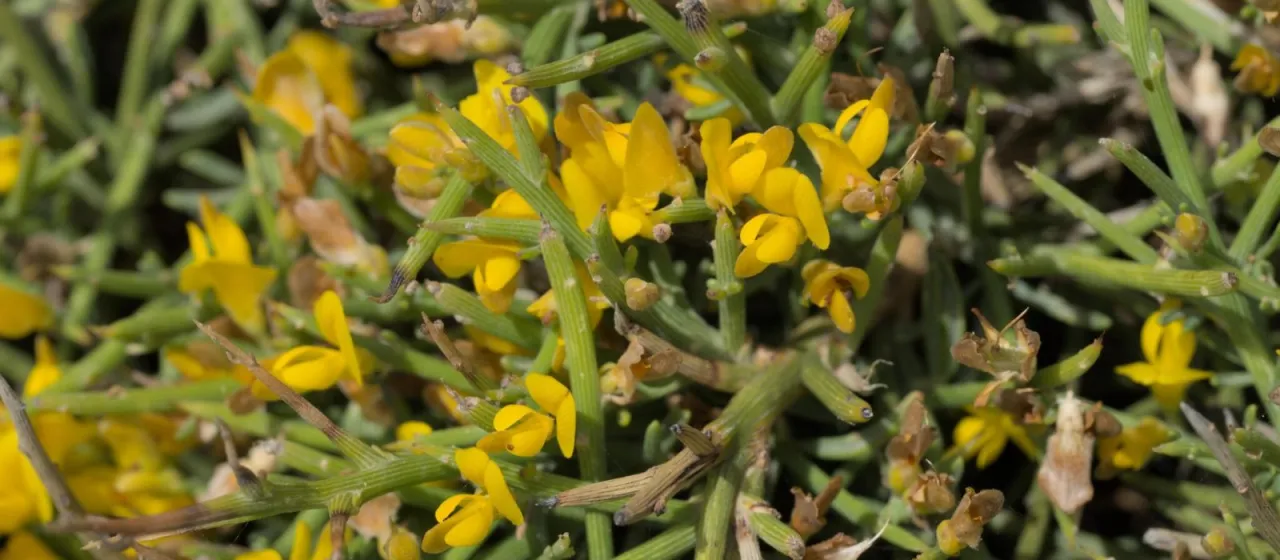
Botanically, the plant is characterized by a dense framework of rigid, thorny branches that provide protection against herbivores. Its foliage is reduced and often ephemeral to minimize water loss during the intense summer heat. The bloom cycle occurs in late spring, producing bright yellow flowers that are highly attractive to local pollinators.
Cultivation requires strict attention to soil drainage; the plant will not tolerate waterlogged conditions. It thrives in poor, rocky, or sandy soils with a neutral or alkaline pH. Minimal maintenance is required, as the plant is adapted to sparse rainfall and does not necessitate intensive fertilization, largely due to its symbiotic relationship with nitrogen-fixing bacteria.
Horticultural use is focused on landscape design in dry regions, particularly for stabilizing loose embankments and creating low-maintenance borders. While the species is highly resistant, growers should monitor for potential pests such as aphids or seed-eating beetles and ensure that airflow remains high to prevent fungal root rot during cooler, damp months.