
Description
White broom (Genista albida) is a perennial semi-shrub belonging to the Fabaceae family. This species is widely recognized for its robust nature and aesthetic appeal, making it a valuable plant for erosion control and dry-garden landscaping in temperate and Mediterranean-like climates.
Originating from parts of Southern Europe and the Balkan region, this plant has adapted to survive in challenging environments. It typically grows on stony hillsides, rocky terrain, and sandy soils where moisture is scarce and exposure to direct sunlight is constant throughout the growing season.
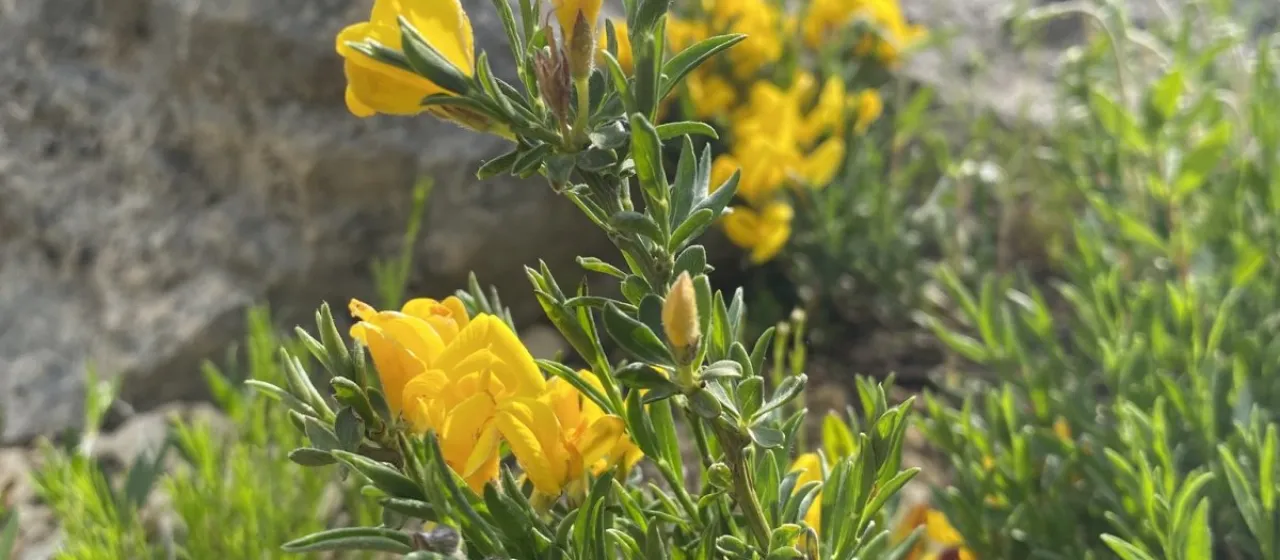
Botanically, Genista albida is characterized by its distinct silvery-white foliage, covered in fine hairs that serve as a natural protection against transpiration. The plant produces dense clusters of bright yellow, pea-like flowers during the late spring and early summer months, providing a striking visual impact.
Regarding cultural requirements, white broom is highly intolerant of waterlogged conditions. It thrives in well-drained, alkaline to neutral soils. In an agricultural setting, it does not require significant fertilization, as like many legumes, it can improve soil quality by fixing atmospheric nitrogen through root nodules.
Management of the crop requires minimal intervention, primarily focusing on location selection to ensure maximum sun exposure. While generally hardy, the plant can be susceptible to aphids or fungal infections if planted in areas with poor airflow. Proper pruning after the flowering season helps maintain the shape and vigor of the shrub, ensuring a healthy growth cycle for the following year.