
Description
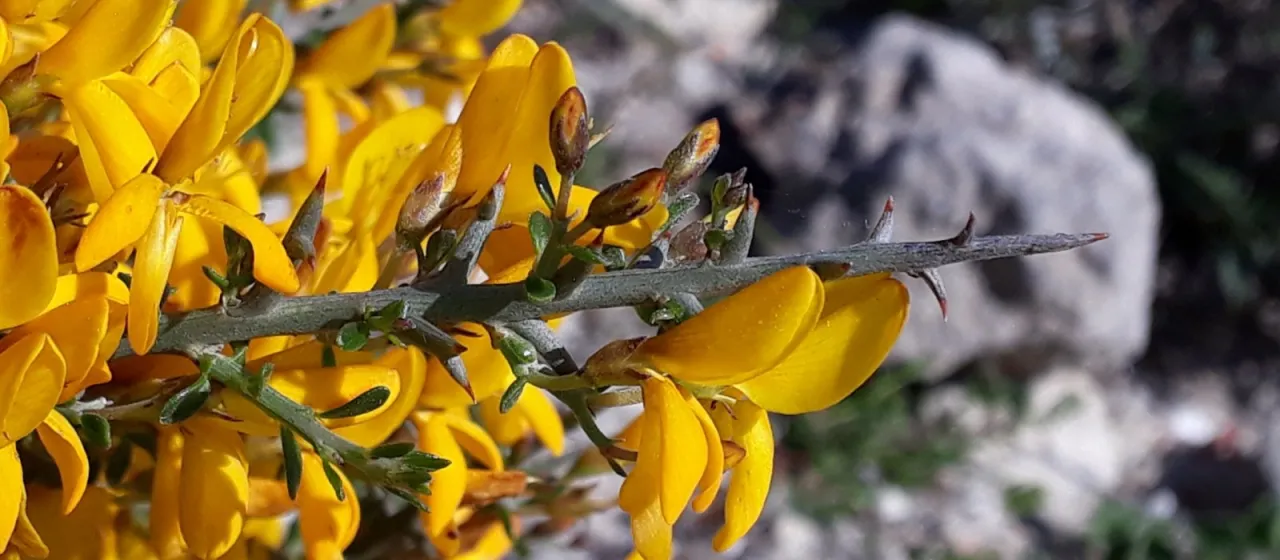
Corsican broom (Genista corsica) is a perennial evergreen shrub belonging to the Fabaceae family. It is a highly resilient plant that is widely recognized for its ability to thrive in poor, rocky conditions while producing a stunning display of golden-yellow flowers.
The plant originates from the island of Corsica and is native to the Mediterranean basin. Its natural habitat includes rocky slopes and maquis shrublands, where it has evolved to survive high temperatures and irregular precipitation. This heritage makes it an ideal candidate for gardens located in arid or semi-arid climates.
Botanically, the plant is characterized by its low-growing, dense habit, typically reaching a height of about half a meter. Its leaves are small and simple, often linear, which minimizes transpiration. The flowers are typically papilionaceous (pea-like) and arranged in racemes, providing a significant visual impact during the late spring blooming season.
Regarding agrotechnical requirements, Corsican broom demands well-draining soil, preferably of a sandy or rocky composition. It does not tolerate heavy, waterlogged clay soils, which can lead to root rot. Full sun exposure is non-negotiable for healthy growth and prolific flowering. As a nitrogen-fixing legume, it generally requires very little in terms of fertilization.
In terms of usage, the plant is primarily employed in landscaping as a ground cover or for stabilizing soil on banks and slopes. It is susceptible to occasional infestations by spider mites or aphids, particularly in poorly ventilated conditions. Regular maintenance is simple and usually limited to post-flowering pruning to keep the plant shape dense and prevent it from becoming woody at the base.